ThoughtShades FrameWork

ThoughtSculpting:
Essays, Themes, Opinions

PrimaryColors:
Constructs, Practical Ideas, Applications

VersePainting:
Poetry, Impression Writing

WordShaping:
Sermons, Devotions

LifeSketching:
Personal Revelations, Illustrations

Viewpoint: Politics, Contemporary Issues, Editorials

GuestGalleries:

Choice Offerings by Others

Powered by Squarespace

ThoughtShades

Opinions, expressions, essays and devotions. 


Tuesday
Jul242007

The Job Nobody Can Quit

quit.jpg People, by the thousands, walk off jobs every day. They cite overwork, underpayment, intolerable conditions, unbearable supervisors, impossible tasks, and a host of other reasons. Quitting poses no special difficulty. You just say, “I’m outta here! I’m history! See you later”, and walk out the door. Contract or courtesy may demand a weeks notice, but that’s all. No one can be held in a job against his or her will.

People quit lots of things. Some quit being a husband, wife or parent. Some quit school, diets, health clubs and political parties. Some quit churches, choirs, Sunday schools, and deacon boards. Pastors quit their ministry, doctors and lawyers quit their practices, coaches quit their teams and donors quit giving. It’s easy. You simply stop.

One job, however, refuses to let you quit. It’s called being an example.

Call it unfair if you want to. Call it oppressive, burdensome, cruel or unjust if you like. Get mad, rant, rave and stomp. Spit, hit, kick and scream. Write letters, lead protests and conduct crusades against it. Make a law forbidding it or pass an amendment to outlaw it. No matter. You are an example to someone, somewhere whether you like it or not. You can never, never, never stop. You may only determine what kind of an example you will be.

Peter said, “For even hereunto were ye called: because Christ also suffered for us, leaving us an example, that ye should follow his steps.” I Peter 2:21. Jesus never forgot this awesome task. He carefully pointed out to his disciples that every action, every decision, every commitment he made had to be copied in their lives, either spiritually or literally. When he was hated, he reminded us that we would be hated too. When he was compelled to carry the cross, he told us we also had a cross. When he did mighty works, he said “These works shall ye do, and greater…” Although we cannot duplicate Calvary , in discipleship Jesus taught, “Follow me”, because we must replicate his example. “For I have given you an example, that ye should do as I have done to you.” John 13:15.

If I were to follow you, where would you lead me? If I copied your example, would I be more Christ like or more like the world? You may say, “Don’t watch me,” but I will anyway. You will either teach me how or how not to live.

If you are a good example for others, they will praise you.
If you are a bad example, they will blame you.

Popular philosophy rejects this burden. The modern mind thinks that nothing should dictate to a person his choices, his lifestyles and the fulfillment of his desires. Everyone ought to be free—-free from the imposition of traditional roles by his parents’ generation, free from the immature expectations of his children and free from the confining demands of his friends’ value systems. “I am free to be me”, goes the mantra. Today, no one wants to be shackled with the role of being someone’s example. Sorry, it doesn’t work that way.

By being irresponsible, you model irresponsibility.
By being a rebel, you model rebellion.
By being materialistic, you model materialism.

Sodom and Gomorrah will forever serve as an example of sin. “Even as Sodom and Gomorrha, and the cities about them in like manner, giving themselves over to fornication, and going after strange flesh, are set forth for an example, suffering the vengeance of eternal fire. Jude 1:7. Disobedient Israel suffered the same fate. “Now these things were our examples, to the intent we should not lust after evil things, as they also lusted.” I Corinthians 10:6.

Take responsibility for others, as well as yourself.

By being faithful, you model faithfulness.
By being righteousness, you model righteousness.
By being honest, you model honesty.
By being a true disciple, you model discipleship.

It is inescapable. It is one job you cannot quit.

Tuesday
Jul242007

The Awesome Responsibility of Answered Prayer

prayer.jpg A number of years ago, someone took a survey among churchgoers to find out what subject they most wanted to hear their pastors preach. Prayer emerged as the number one response. My guess is that little has changed. Deep within the heart of every child of God, a voice still cries out to learn more about prayer. “Teach us to pray,” the disciples asked. Now, a spate of books, pamphlets, Bible studies and sermons seek to satisfy that desire. Churches have more prayer meetings and prayer programs than ever. Prayer chains, prayer seminars, prayer partners, prayer journals and prayer journeys grow in popularity. Our World Network of Prayer can mobilize thousands of prayer warriors within minutes.

Isn’t it ironic that, with all our teaching on prayer, one of our greatest concerns continues to be why God doesn’t answer some of our prayers? We wonder if it is because of sin or disobedience in our lives. We often agonize over our seeming lack of faith. I am convinced, however, that God answers far more of our prayers than we realize He does. We tend to forget the vast numbers of prayers we have prayed for health, strength, safety, blessing and guidance. Who knows what untold tragedies have unwittingly slipped past us, simply because we prayed. Moreover, all of us have encountered major needs—-disease, injury, marital problems, financial disasters, Satanic attacks—-and have witnessed God’s power coming through for us when we needed it the most.

Yes, God answers prayer. But the significant truth to observe is this: When God answers prayer, He places on us an awesome responsibility! In effect, He says to us, “Now that I have answered your prayer, what difference will this make in your life and your relationship to me?”

Answered prayer asks us for reciprocating sacrifice. Look at the example of Hannah. “For this child I prayed; and the LORD hath given me my petition which I asked of him: Therefore also I have lent him to the LORD; as long as he liveth he shall be lent to the LORD.” I Samuel 1:26-28. Hannah wanted a son, but God wanted a prophet. Samuel’s tremendous influence on the history of Israel hinged on two things: God answered prayer and Hannah responded.

Answered prayer demands that we follow through with the will of God. Elijah prayed a simple, powerful prayer when He challenged the prophets of Baal. The fire fell and consumed the bullock, the altar and the water. But the answer was not for a show. It demanded a response. “And when all the people saw it, they fell on their faces: and they said, The LORD, he is the God; the LORD, he is the God. And Elijah said unto them, Take the prophets of Baal; let not one of them escape. And they took them: and Elijah brought them down to the brook Kishon, and slew them there.” I Kings 18:39 -40. Difficult though it may have been, Elijah made the Israelites slay the prophets of Baal after the fire fell on the sacrifice.

Answered prayer calls upon us for greater faith and trust in God. Gideon’s fleece was not a set-up for God, but for Gideon. The first time Gideon prayed, the fleece was wet with dew but the ground was dry. Nervous about the answer, Gideon prayed again. “And Gideon said unto God, Let not thine anger be hot against me, and I will speak but this once: let me prove, I pray thee, but this once with the fleece; let it now be dry only upon the fleece, and upon all the ground let there be dew. And God did so that night: for it was dry upon the fleece only, and there was dew on all the ground.” Judges 6:38-40. The next verse finds Gideon rising up early to fight against the Midianites. He knew that when the answer came through, it was time to move.

What prayers have God answered for you lately? Have you been granted salvation, a reunited marriage, a restored family, a miraculous healing, financial blessing or an anointed ministry? Have you seen impossible situations work out? Have you seen revival and the fruit of your labors? Whatever God has done for you, mark it down—-He has done it for a reason. The tandem of answered prayer and a right response fulfills the purposes of God. Once the answer to our prayer comes through, the responsibility shifts over to our shoulders. Let us carry it well.

Sunday
Jul222007

Connect the Dots

navigate.gifNothing surpasses a fixed, precise destination in guiding a ship across the open seas. The target point dictates the ships heading, maneuverings, and minute calculations. Pilots process hundreds of critical factors along the way, but their purposeful move toward the destination firmly governs every decision.

In order to arrive at the right destination, sea captains pinpoint locations on navigational maps as they chart their courses. They measure ocean depths, current strength, wind velocity, speed and many other factors. With data from soundings, compasses and electronic devices, they connect the dots to plot safe passageways. But, even the most sophisticated equipment will yield meaningless results unless the pilot keeps his focus on his destination. If he forgets where he is going, all incoming facts become trivial.

Nothing guides the church more surely than a sense of divine purpose as it negotiates the open seas of cultural and spiritual turmoil. Whether it’s the soft winds of prosperity that gently push the church off course, or the swift undercurrent of devilish doctrines that tries to pull it out to sea, the purposeful focus on the ultimate goal soon restores its bearing. Purpose, visible only by faithfully navigating through the dots on the map, guarantees the success of the journey.

It is no wonder, therefore, that a satanically controlled society seeks to obliterate the church’s overarching sense of purpose. Without purpose to guide it, the church may not discern between critical data and meaningless facts. Today, in fact, rules and laws have been reduced to insignificance. Neither the sacred nor the profane, the good nor the bad, the beautiful nor the ugly, the right nor the wrong matters anymore.

Nihilism rules. Nihilism stands for the total rejection of social mores, especially of morality and religion; the belief that nothing is worthwhile: that life is pointless and human values are worthless; d isbelief in objective truth ; and the belief in destruction of authority: that all established authority is corrupt and must be destroyed in order to rebuild a just society. (Encarta.) The bywords of this philosophy are, “Who cares?” and “it doesn’t make any difference.” Its effective tools are music, art, television and education. Lest the unsuspecting think it’s “just music”, or only “harmless fun”, go ahead and connect the dots.

The MTV generation pulsates with nihilistic lyrics and music. Its rock and screen stars, writers and producers viciously attack traditional values by exalting sex, crime, demon possession and drugs to the point of worship. Writer Jon Podhoretz, says “The 1968 Broadway musical ‘Hair’ was an important turning point in American culture in very interesting and unexpected ways…“’Hair’ was originally billed as the ‘tribal love-rock musical’…The fact that ‘Hair’ had no plot and was merely a series of vignettes and drug-induced hallucinations experienced by sketchy characters who are all members of a hippie clique living in the East Village was seen as a great leap forward.” (National Review Online, 5-4-01 .) One of Hip Hop music’s big names, Puff Daddy, (now P. Diddy) screams lyrics that cannot be quoted in a decent magazine. A Puff Daddy hit, “Angels With Dirty Faces”, suggests enough filth by its title alone, without revealing the actual words to the song. The entertainment rationale for their agenda, if it ever existed, fell by the wayside long ago. It now intends to trash every boundary, every tenet of faith, every sacred icon and every time-honored virtue. The point is now is not even to shock or insult, but to destroy society as we know it and replace it with one of absolute fleshly freedom and affirmation of everything. If you wonder how we, as a society, got to where we are now, connect the dots on the devil’s navigational map. For this world, the purpose of God has been usurped by the politics of societal destruction.

Bizarre events and sick characters dot the cultural landscape today. We often survey the passing scene, amused and nonplussed, but lacking genuine concern. When we begin to connect the dots, however, the true picture takes shape. As the church, however, our job is to establish strong and emphatic points from scripture that will lead us to our destination. “And beside this, giving all diligence, add to your faith virtue; and to virtue knowledge; and to knowledge temperance; and to temperance patience; and to patience godliness; and to godliness brotherly kindness; and to brotherly kindness charity.” II Peter 1:5-7. An unaltered course, based on uncompromised truths, guided by an unchanging sense of purpose will take us to our final destination. Connect the dots.

Sunday
Jul222007

What Is Your Adversity Quotient ?

conquer2.jpg“If thou faint in the day of adversity, thy strength is small.” Proverbs 24:10.

Real life is cut from the fabric of adversity. Whether we yank on rusted bolts, cower in dentist’s chairs or reel from offensive insults, all of us who don’t get our way paid face the brunt of adversity on a daily basis. The difference between us lies in our reaction to it.

Some people seem to meet and beat all adversity. I’m not talking daredevils, fate-tempters or show-offs. People like these deserve every ounce of adversity they get. No, I’m referring to people who possess a buoyant, irrepressible spirit, people for whom adversity only regenerates their resolve. They are like the kid in the neighborhood who would never cry uncle, even though he got his arm broken…or like the bear raiding a beehive: the honey is sweeter than the stings are nasty. These are people who have discovered that whenever the goal means more than the pain of adversity, they win!

In his book Adversity Quotient@Work, Paul Stoltz points out that the best plan in the world won’t work if a person cannot take adversity. Regardless of how brilliant the plan, or how venerable the institution, or how legendary the player, adversity arises in the pathway. Any assumption that adversity runs away from us, scared to death, is folly. Inspiration will meet adversity. So will ingenuity, prosperity, success, favorable circumstances, organization and reputation.

So, how do we handle it? Stoltz says we are quitters, campers or climbers. Some of us fold the tent at the first sign of adversity and just quit. Others find out where their level of tolerance to normal adversity fluctuates and learn to live within that range. They are campers. The most successful among us, however, never discover anything that stops them. They keep climbing, battling against the most brutal opposition, until they plant their flag at the top.

Whenever you see spiritually successful people, don’t admire their brilliance or covet their favorable environment. Instead, examine their adversity quotient. No saint achieves a consistent prayer life without adversity standing in the way. No parent enjoys victory in their home without adversity. No godly man or woman lives an overcoming life without adversity challenging every moment. No flaming evangel witnesses for Christ without adversity showing up at every opportunity. None of these people have a superior strain of the Holy Ghost. They don’t have a better plan. They don’t command more angels as ministering spirits. They simply refuse to allow adversity to win.

The Apostolic church has the best plan in the world. We preach the life-transforming gospel of the Lord Jesus Christ. We teach the death, burial and resurrection of Jesus. We know that repentance, baptism in Jesus’ name and the infilling of the Holy Ghost constitutes full Bible salvation. We not only know these things theologically, we witness them experientially. Everything we need and want is in our relationship with God. If any of us have a problem, it is not in our plan, but in our diminished capacity for adversity.

Expect adversity. “Be sober…for your adversary, the Devil, walketh about as a roaring lion, seeking whom he may devour.” Jesus said, “In the world ye shall have tribulation: but be of good cheer; I have overcome the world.” John 16:33. Every trap, snare and stumbling block is before you. Sickness, tragedy, trouble, rejection, human failure, temptation and opposition of every brand, stripe and form will menace you. Many foes are real. Many are imaginary. Many are unrealized threats. All constitute adversity. Every great revival was spawned in adversity.

God may never take away the adversity, but he will do two things:

He will give you an increased capacity to absorb it! There hath no temptation taken you but such as is common to man: but God is faithful, who will not suffer you to be tempted above that ye are able; but will with the temptation also make a way to escape, that ye may be able to bear it. I Corinthians 10:13. Paul said, “None of these things move me.” Acts 20:24 .

He will show you the way to victory over it! I John 4:4 says, Ye are of God, little children, and have overcome them: because greater is he that is in you, than he that is in the world.” By going on the offense, by committing yourself to spiritual disciplines, by looking to your goals rather than your goblins, you will destroy the material sources of your failures.

We cannot improve our plan. We can, and must, improve our adversity quotient!

Sunday
Jul222007

Just Forget It!

hard-drive.jpgAside from speed, one of the computer’s most vital features is memory. It consists of two elements: RAM (random access memory), equal to the brain’s short-term memory, and the hard disk storage, or long-term memory. Computer operators can record words, pictures, sounds, video-clips, spreadsheets and other complicated files and store it in the memory. Everything works fine—-as long as they understand the delete key. With a single stroke, a file that took hours or even days to put together can be wiped out. And the computer does not know the significance of one file over another. It doesn’t know a good letter from a bad one, a priceless picture from a worthless one.

Do you ever wish you had a delete key connected to your brain? Wouldn’t it be great to just hit a key, and suddenly ugly, painful memories would vanish? What would you wipe out if you could? An abusive relationship? A stupid mistake? An ill spoken word? The death of a loved one?

Our minds do try very hard to erase painful scenes from memory. The problem is that we don’t do a very good job of it, and the pain often gets shoved into some other form. Hence, we have the following terms:

  • Denial: An attempt, sometimes subconscious, to tell ourselves that something didn’t happen;
  • Repression: Pushing a bad memory back so far that it cannot be recalled without intervention;
  • Rationalization: Fabricating elaborate explanations for one’s own or someone else’s failure.

In addition, we have compulsions, delusions, displacement, fantasy, projection, withdrawal, regression and other terms pertaining to psychological matters. All are ways that people try to forget the things that cause them pain. We want to alter the state of things in our mind.

These mechanisms rarely work. Most of the time they make things worse. People commit crimes, have nervous breakdowns, or even take their own lives because they cannot forget.

So, how does forgiveness work? How can we forget something that really happened and will not go away? How can we forgive someone of hurt when our mind keeps bringing it back? How can we truly be free if our memory won’t allow us to forget?

There are some things that we cannot forget: We must never forget the things God has done for us. We must never forget the Word of God; Deuteronomy 4:23 “Take heed unto yourselves, lest ye forget the covenant of the LORD”; We must never forget God Himself; Deuteronomy 6:12 “Then beware lest thou forget the LORD, which brought thee forth out of the land of Egypt, from the house of bondage.

There are some things that we must forget: Philippians 3:13 “Brethren, I count not myself to have apprehended: but this one thing I do, forgetting those things which are behind, and reaching forth unto those things which are before.”

What is the secret of forgetting the painful past? Three things must be remembered in order to forget.

The cleansing power of the blood of Jesus. The blood, constantly applied, counteracts the past. “If we confess our sins, he is faithful and just to forgive us our sins, and to cleanse us from all unrighteousness.” I John 1:9.

The elevating power of the Spirit of Christ. He will lift us up out of our memories. Ephesians 2:1-6 “And you hath he quickened, who were dead in trespasses and sins; Wherein in time past ye walked according to the course of this world… But God, who is rich in mercy, for his great love wherewith he loved us, Even when we were dead in sins, hath quickened us together with Christ, (by grace ye are saved;) And hath raised us up together, and made us sit together in heavenly places in Christ Jesus:

The constantly abiding presence of God. Lean on Him! Psalm 23:4 “Yea, though I walk through the valley of the shadow of death, I will fear no evil: for thou art with me; thy rod and thy staff they comfort me.”

Sunday
Jul222007

Is Faith Your Missing Ingredient?

gasgauge2.jpg“Nevertheless when the Son of man cometh, shall he find faith on the earth?”  Luke 18:8

It may not sound too profound, but cars need gasoline to run. Appliances require electricity. Perfectly manufactured machines will always fail without the component that supplies the power. The human body dies without food. Despite these simple principles, many people continue to have unrealistic expectations of the mechanics of their religion. Bended knees and pious prayers will not work without faith. Repentance minus current faith will not work. Water baptism without faith becomes ritualism. No matter how long they pray or how much they beg, no one receives the Holy Ghost without faith. In Hebrews 4:2 we read, “For unto us was the gospel preached, as well as unto them: but the word preached did not profit them, not being mixed with faith in them that heard it.”

In the scriptures, faith is not a nebulous, unexpressed thought. Time after time, we see faith activated through hands, eyes, the heart’s response and other easily identifiable means.

Faith is the hand that receives the gift of God.And, behold, a woman, which was diseased with an issue of blood twelve years, came behind him, and touched the hem of his garment: For she said within herself, If I may but touch his garment, I shall be whole. But Jesus turned him about, and when he saw her, he said, Daughter, be of good comfort; thy faith hath made thee whole. And the woman was made whole from that hour.” Matthew 9:19-22. When she reached out with her hand, she validated her inner faith.

Faith is the eye that sees things beyond human imagination.Now faith is the substance of things hoped for, the evidence of things not seen.” Hebrews 11:1. Out of covetousness or greed, some dream for things and call it faith. Others wish for things that would serve no spiritual purpose and call it faith. But faith is not the domain for foolish speculation and outlandish dreams that have no basis in reality. The substance and evidence of faith define those things that God has promised in His Word.

Faith is the heart’s response to the call of the Lord.For with the heart man believeth unto righteousness; and with the mouth confession is made unto salvation.” Romans 10:10. Every aspect of salvation we enjoy today finds it roots in faith. Faith validates regeneration, sanctification, justification, and adoption. At no point does faith become unnecessary. At no time should we just assume that these attributes are automatic. Our heart must continually beat in time with God.

Faith is the soul’s reliance upon the Lord Jesus Christ.Nevertheless I am not ashamed: for I know whom I have believed, and am persuaded that he is able to keep that which I have committed unto him against that day.” II Timothy 1:12. This is the Christian’s answer to the daily dose of doubt that the devil dumps on us. Faith becomes the antidote to discouragement, trouble, depression and despair. Faith sustains us when nothing else can.

Faith is the conductor of the power of God.He therefore that ministereth to you the Spirit, and worketh miracles among you, doeth he it by the works of the law, or by the hearing of faith”? Galatians 3:5 Your attitude and faith do make a difference when you hear the Word of God preached or taught. Never come to church with a negative attitude, thinking you will get nothing out of the service. Faith connects you with the dynamics of truth and turns them into effective, life-changing solutions.

Faith is the motivator that makes us obey God’s commands.By faith the walls of Jericho fell down, after they were compassed about seven days . Hebrews 11:30. Obedience to the call to march around Jericho would have been drudgery without faith. Divine direction said, “March!” Faith gladly obeyed. Triumph followed. Obedience is always the proof of faith. Where there is no obedience, there is no faith. Therefore, if we would triumph, we must obey.

Doubt, dejection, fear, hopelessness, spiritual boredom, confusion and a sense that nothing is working signal the lack of faith. Pump faith back into your life, and you will enjoy a revival of God’s Spirit. God did not design you to function outside of a relationship with Himself. As you are plugged into Him through the medium of faith, you will experience the joy of His presence.

Saturday
Jul212007

Consistency (Yawn)

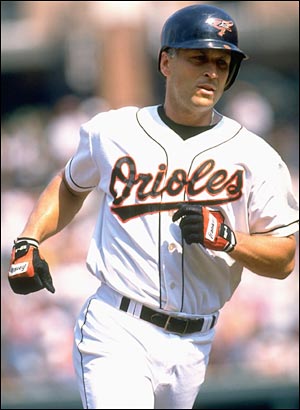
t1_ripken.jpg“Given his history of injuries, and his familiarity with the grind of a 162-game season, he seems especially impressed with the toughness and durability of Ripken. “He was just a consistent player—he was the grinder. He just went out every day and did his job. He’s probably the most consistent guy, because that’s what he was—Mr. Consistency. He was in there every day, and he just grinded it out.”  So said Fred Lynn, 1975 American League MVP and Rookie of the Year, in an interview with Sean Kennedy.  Consistency.  (Yawn.  How boring.)

Success for any endeavor hinges on many things. Some say it is cleverness. Others say it takes motivation. Others believe it to be money, favor, chance, or good looks. But in the entire spectrum of human activity, one virtue always shows up in the equation. It’s called consistency. It is the one trait that makes everything else work. “Therefore, my beloved brethren, be ye stedfast, unmoveable, always abounding in the work of the Lord, forasmuch as ye know that your labour is not in vain in the Lord.” 1 Corinthians 15:58

We know consistency is important. Yet, maintaining it often requires agonizing struggle. Why? If we personalize consistency, several reasons present themselves.

Self-image is a huge problem for consistency. It sees itself as a stepchild in the family of behavioral traits. Other qualities always get more attention. No one loves consistency like they do a charismatic personality, a brilliant playmaker, a talented performer or a guy who can bankroll a project. Because it lives in the shadows of more exciting and celebrated family members, consistency often considers itself unimportant.

Moreover, consistency carries other baggage that makes its job equally hard. It is frequently told that it is too weak, too tired, too anemic and too sick to carry on. It is informed that the mountain is too high, the valley too low, the river too wide, the current too strong, the costs too great and the help too meager to succeed.

A constant barrage of temptations to quit rails on consistency. It feels overlooked, unappreciated and unfairly used. It continually hears itself called worthless, silly and stupid. It rarely sees the fruits of its labor on a daily basis. Without an encouraging word, it regularly feels like throwing in the towel.

But let me tell you the real truth about consistency, not in baseball, but in church work. Pastors, Sunday School superintendents and other church leaders value consistency as much or more than any other trait. They know that brilliant, innovative and talented people often fizzle as quickly as they rise. Music directors like great voices, but they realize that choirs depend upon those faithful, regular, consistent members who never miss a practice. Pastors love ushers whom they don’t have to call every service to see if they will be in attendance. They appreciate tithe-payers who may not have a big amount to give, but their envelopes are there every week. They are grateful for the consistent saints who make it to church rain or shine, sick or well, rich or poor. Outreach directors thank God for the person who goes out on visitation without fail.

It may take a while, but consistency builds its equity over time. Like the stock that the investor sticks with over the long haul, it eventually pays handsome dividends. It may not break records, draw standing ovations or leave them rolling in the aisles, but it gets the tough jobs done year in and year out.

The inconsistent person blames people and circumstances for failure, but he really falls prey to his own inconsistency. The scared, the temperamental, the distracted, the erratic and the in-and-outer create impossible legacies for themselves. They can’t trust themselves to follow through, keep going, hang on and do things right. They are like the halfback who runs tentatively for fear of fumbling the football. Or the infielder who lets the grounder get by him due to lack of confidence. The inconsistent lose before they ever get started.

On the other hand, the believer who builds consistency into his life will always win the battle. When he gets started on something, the notion to quit never enters his mind. He expects it to be tough. He anticipates long, dry spells. But he sees the sweetness of consistent living as its own reward. Satan trembles when a consistent saint of God embarks on a spiritual quest. He knows consistency is formidable.

Cultivate consistency. It wins ballgames.  Even though you consider yourself a person of average ability, consistency makes you superior. You will discover that, whether it graces your personal life, your walk with God, your service in the church or your ministry, it will be the ingredient most vital to your ultimate victory.

Saturday
Jul212007

My Mug Collection

wandmugblue.jpg My wife has her hundreds of gorgeous teapots all over the house, her Precious Moments assemblage, her extensive sets of china dinnerware and her Thomas Kincaid pieces. Then there’s my stuff. The only two things that rate high enough to be displayed close to her collections include my grandfather’s railroad watch, and a two hundred dollar pen that I bought on the Monterey Peninsula in California . (Once the gold plating started to wear off, I archived it. You never trash a pen you actually paid for, let alone one that cost that much!)

Setting aside my 2,500 volume library (that, my friend, is totally work-related), you have to come down a few notches on the collectors’ scale to assess the few trinkets I keep. Still, of all my treasures, I love my collection of coffee mugs that lines a cheap wooden case mounted on our basement wall the most. These mugs, from the Hershey Bar to the Flag of Greece, from the Royal Canadian Mounted Police piece to the NASA Space Center mug from Houston , hale from places I’ve been fortunate enough to go. Whenever I visit someplace in the world, it’s always an added pleasure to shop for a mug that is unique, a beautiful piece of art, or even something that just carries the signature of the locale. Sometimes I get all three in one, as in my favorite, an exquisitely painted Fife and Drum Corps mug, from Colonial Williamsburg. (Then again, I really like my man-sized mug from Pebble Beach Golf Links!) My mugs only get used for hot liquids on very special occasions. Most of the time they sit on the shelf, collecting dust and meeting the needs of the soul rather than those of the stomach. One glance takes me to exotic places, warm people and great experiences. It’s amazing how a piece of painted porcelain can instantaneously become a touchstone to awaken dormant memories.

This collection represents a larger principle, a lesson for the character. They ensure that I never travel through life and return empty-handed, as if all the things I saw, and heard, and felt and that happened to me were nothing. I feel a deep-down obligation to take something away from every experience God grants me. Whenever I visit memorable places, meet marvelous people, or engage in truly meaningful experiences, something in me must register the impact. To shrug my shoulders and say, “No big deal,” or refuse to be affected by the things that happen to me would put my shallowness and selfishness on display.

I have been extraordinarily blessed to meet and know great men of God in my travels. Some, like Oliver Fauss, Oscar Vouga, R. G. Cook, L. J. Roshon, W. R. Starr, M. M. Hudson, George Chambers, George Glass and my father, Victor L. Jordan have gone on to their reward. Each one left an indelible mark on my life. When I think of patience, strength, wisdom, love of doctrine, gentleness and integrity, their faces and names occupy permanent perches in my memory banks. Now, I am privileged to serve on boards and committees with exceptional men of God. They exude spiritual values which continue to affect me. When I wrestle with a problem, I am likely to pick up the phone and seek their advice. Someday, I will reverently display their condensed wisdom on the walls of my life.

All of us travel across the varied terrains of our individual callings. Sometimes, we remember the tough stretches of the road the most. No one likes valleys, but all of us go through them. What we learn from them and what we take home from the trip is the important question. The deep valleys of life, however painful, forge invaluable memories that we ought to keep close at hand. We must come away from such trials tightly gripping our mementos of prayer experiences, freshly gained self-insight, and a renewed vision of God. Intense suffering instills qualities within our souls that can be acquired no other way.

But, for every valley, a mountaintop has made up the difference. It’s easy to come away from great times and successful ventures with heady feelings and a sense of fulfillment. It is far better, however, to be humbled by our successes than to be exalted by them. Pride, arrogance and an inordinate sense of self-sufficiency would be ugly blights in my display. Gratitude and humility fit the collection much better.

The incremental passage of time makes history only in the chronological sense. In reality, experiences are timeless—-they will always stay with you. You may not recognize it, but things that have happened to you will inevitably wind up displayed prominently somewhere in your identity, your value system and your soul. You alone are the one who decides what stays and what goes. It all depends on what you take home with you.

C. Neil Strait says, “That man who deposits experiences carefully in his memory will draw rich returns from his life. A flashback from such a past will be rewarding not remorseful. The memory can store the good things from experiences and draw dividends from them throughout life. Or, it can choose to store the horrible experiences and have only a dismal past to recall.”

Don’t take everything home. I recall some hideous masks that looked like witchdoctor’s paraphernalia that I bought in the Philippines . They were carved out of some exotic wood, beautifully stained, and I could picture them hanging on my office wall. That’s when my wife spoke up. No way. To this day, I can’t remember if I gave them away or stuck them in a trash receptacle at the airport, but I do recall that they never made the flight back. Don’t be afraid to leave some experiences in the graveyard of bad days. They would only downgrade the value of the good things you need to display.

Where have you been, lately? What intriguing person have you met? What excruciating experience have you endured? What lesson have you learned? What will you take home with you? It’s up to you.