ThoughtShades FrameWork

ThoughtSculpting:
Essays, Themes, Opinions

PrimaryColors:
Constructs, Practical Ideas, Applications

VersePainting:
Poetry, Impression Writing

WordShaping:
Sermons, Devotions

LifeSketching:
Personal Revelations, Illustrations

Viewpoint: Politics, Contemporary Issues, Editorials

GuestGalleries:

Choice Offerings by Others

Powered by Squarespace

ThoughtShades

Opinions, expressions, essays and devotions. 


Wednesday
Jan112012

Spiritual Step-Parenting

I am not the first pastor for many of the people in my church.  Some have had as many as six pastors before coming here.  One can only imagine how confusing and painful each transition has been and what they felt each time they had to submit to a new leader and adjust to a new church.  This is becoming an increasingly common reality among us, and there are vital issues generated that need to be recognized and addressed.  Healing past hurts, developing a sense of belonging, submitting to authority, integrating into the new church community, spiritual nurturing and growth, church retention, opportunity for ministry and many other issues make up this growing need.  If I agree to become a person’s pastor, I assume responsibility for his or her spiritual welfare. 

People move through several stages as they integrate into a new church and accept the leadership of a new pastor.  First, the circumstances which brought about the change may be a huge factor in how successfully they negotiate the journey.  If it was due to a simple move, a job change or some other normal shift that life often brings, the beginning of the transition may not be too traumatic.  If trouble, disappointment or some negative situation forced them out of their former church and into a new one, those issues will need attention and it will take time for the wounds to heal.  

Second, after people attend the new church for a while, the differences between the churches will become more pronounced.  Rules, customs, policies, standards, expectations and other differences need to be processed in their minds.  Some new things will be a welcome change for them, but some will not.  How well they do will depend largely on how they were discipled in the first place.  Their own personality will also be a major factor.  

Third, they will go through a period of adjustment to the new pastor’s personality and leadership style.  During this time, they will determine whether or not they sense genuine love and care, whether they can grow, whether their family and friends will like the new pastor and church, and whether they will be an active participant or a pew-sitter.   They will also assess the community of church members in the new congregation on the same basis.  Do they like the people?  Can they relate to them?  

The fourth stage is related to the third:  will they buy into the vision, the passion and the spirit of the new church?  How soon, if ever, will they refer to it as “my church?”  

Fifth, will they settle in and sink their roots into the new church?  Up to this point, everything else can be done at arm’s length.  In this final stage, they fully identify with the new church and will accept everything about it.  

Step-children 

In several significant ways, changing churches and pastors may be compared to step-parenting.  If we can understand the feelings of a step child as he or she adjusts to a stepfather or stepmother, we can gain valuable insight into a person’s heart when joining a new congregation.  Here are some of the common expressions that stepchildren make about their new parent: 

  • You are not my real Dad or Mom.
  • You don’t really know me.
  • You don’t have any right to tell me what to do.
  • I don’t want to be here.
  • Your rules are stupid.
  • You’re worse than my real Dad (or Mom).
  • You don’t love me.
  • You don’t want me here.
  • Why don’t you just go away and leave us alone?   

These emotions run extremely deep.  The step parent who makes light of them will probably never win the love and commitment of the step child.  Step-parenting requires much more work than natural parenting because of the lack of congenital rights, the biological differences in genetic backgrounds, the lack of emotional bonding that natural parenting involves, overcoming the pain of separation from the natural parent and the resentment that that the stepchild harbors for the whole situation in the first place.  

Spiritual Step-children 

Let me now speak directly to the one making the change.  In order for this person to fully adjust to a new church, he or she must start with the right attitude. 

  • I must be saved.
  • I need a pastor and a church to be saved.
  • I didn’t want to change churches but I had no other choice.
  • I will do whatever I need to do to forgive and be healed from past hurts.
  • I realize that I may have bad days, but I will get through them with God’s help.
  • There are things I still love about my old church so I will not become bitter against them.
  • This new pastor and church is not responsible for what happened to me.
  • I will not transfer my suspicion and resentment to the new church.
  • I may go slowly, but I will make steady progress and I will not go backwards.
  • I am going to give the new church and pastor the benefit of the doubt.           

After you are in a new church for a length of time, you must take certain positive steps in order for the integration process to develop.  You should reinforce your basic spiritual disciplines like prayer, bible-reading, church attendance and producing the fruit of the Spirit.  Ask questions of people about different aspects of the new church, not in a confrontational way but to gain insight into their thinking and style.  Try not to compare the new church to your former one.  You may like some differences, but other things you won’t.  You will need a lot of grace and forbearance to get past a few things.  God will help you if you continually submit to him and keep your priorities in place.  

Love stands alone as the primary motivation for all the personal decisions we make in our lives, especially in relationships.  How do you start to love a new church?  Can anyone just decide to love and, “Voila”, everything happens at once?  Hardly.  Yet, you know you have to.  To begin, you need to keep in mind the reason for going to church—to get closer to God.  So, do it.  Focus on the spiritual aspect of the services.  Worship God, even if you have a hard time with the church’s music.  Pray earnestly, even though you don’t know who the prayer requests are for.  Listen and respond to the preaching, even though it’s delivered differently than you are used to.  Spend time in the prayer room.  Pray with people around the altars.  These are practices that shouldn’t require any adjustment, and, more importantly, they will increase your sensitivity to God so he can lead you further.  

When you concentrate on spiritual activities, the people in the new church will notice.  Nothing is more attractive to them than those who come into their midst showing a genuine devotion to God.  Share your testimony with them.  Talk about the scriptures.  Let them feel your spirit and attitude.  After all, they come to church for the same reason you come.  When they sense your love for God, you set them at ease.  A major hurdle melts away and you open the door for new relationships to form.  

Spiritual Step-parenting 

Let’s go back to the stepfather analogy.  The best a stepfather can do is set up the opportunity to gain the trust and love of his new child.  He may take him fishing, hunting or some other activity that interests the child.  He may take her to the mall and let her shop for some new clothes on his credit card.  He may offer to help with homework.  Each time this happens, a chance for interaction and bonding opens up.  The stepfather cannot make the decision to accept—only the child can do that.  Yet, there are some kids who refuse to “take the bait.”  Why?  Because they think, “You’re just doing this to get me to love you.”  Or, “I don’t care what you do, I’m not going to accept you as my dad.”            

This leads the relationship to a critical juncture.  The stepfather may react to the attitude of the stepchild by saying, “Okay, fine.  If you don’t want to be with me, then I don’t want to be with you.  I didn’t ask for you to come into my home in the first place.  I don’t have to do anything for you.  You’re not my kid.”  When this happens, he inflicts enormous emotional damage upon the child.  Because he is the more mature, he must rein in his visceral reactions.  Every parent has to put a guard on his or her feelings in the presence of the child.           

The pastor of someone who comes from another church must take the initiative in building a bridge to him or her.  An earnest conversation in the office can open the door.  There are many facts to learn about the new person, most of which are fairly predictable.  If no church troubles precipitated the move, then there is not much reason to delve any deeper than the obvious.  Conflicts with the former church or pastor, however, present a somewhat different problem.  This calls for some specific steps:           

  • Forgive any real or perceived offense. This is absolutely necessary.
  • You may listen, but only deal with general facts about the past.
  • Communicate with the former pastor.
  • Ask the person not make negative comments about the former pastor or church.
  • Encourage the person to begin a new chapter in life.
  • Help the new member to chart a course to involvement and spiritual growth. 

These developments will not happen overnight, although some people get a foothold more quickly than others.  Monitor the progress.  Never presume to succeed where the former pastor may have failed.  Cull out your own prejudices.  Make sure you are doing everything in a spirit of love, understanding and positive expectation.            

In our increasingly mobile society, we will deal more and more with spiritual step-children.  The receiving pastor’s goal is to make it seem like these new people just came home.  With the right treatment, they will soon call it “my church!”  That is a good feeling for everyone!
Monday
Jan022012

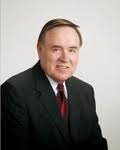
Richard S. Davis

Rev. Richard S. Davis


DAVIS Rev. Richard S. Davis, age 91, passed away on Saturday, December 31, 2011, at Riverside Hospital. Retired Pastor and founder of The Church Triumphant, formerly known as Pentecostal Assembly. He was the first International Youth President of the United Pentecostal Church. Rev. Davis was also a Wisconsin District Superintendent of the UPCI as well as a presbyter of the Ohio UPCI. Graduate Apostolic Bible Institute, St. Paul, MN. He was also an avid fisherman. Preceded in death by first wife Emma Jean Davis, second wife Connie Davis, son Daniel Joseph Davis. Survived by sons, Richard S. (Carol) Davis Jr and Paul Steven (Wanda) Davis; grandchildren, Jon (Melody) Davis, Janey (Matthew) Hundley, Jennifer (Joseph) Keaton, Adam Winberg, Alicia Winberg and Shauna (Ryan) Walters; 10 great-grandchildren; and two great-great-grandchildren; sisters, Louise Smith, Hazel Brigner and Sue Sharp; daughter-in-law, Cheryl Davis; other family and friends. Friends may call at The Church Triumphant, 1001 Vera Place, Tuesday, 4-7 p.m. with funeral services to follow at 7 p.m. Bishop W.L. Sciscoe, Rev. Dr. J.D. Smucker and Pastor Bill Pellum officiating. Graveside service and interment, 11:30 a.m. Wednesday, at Scioto Memorial Burial Park, Wheelersburg, OH. Arrangements completed at JERRY SPEARS FUNERAL HOME, 2693 W. Broad St.

Monday
Dec122011

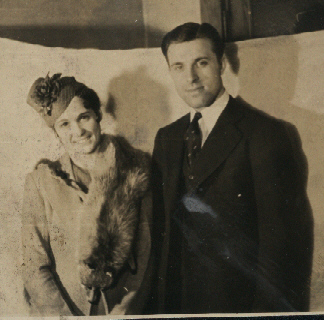
Theodora Jordan

Theodora Jordan, born January 7, 1918 in Indianapolis, IN, to Alexander and Ada Anderson, passed peacefully from this life on December 10, 2011 at the Goerlich Center, Sylvania, Ohio.  A licensed minister with the United Pentecostal Church, International, she served as pastor’s wife at Christian Temple Church (now Westwood UPC) in Jackson, MI from 1956 to 1982.  She was a musician, composer, organist, choir director and teacher.  Mrs. Jordan was especially known for her “fiery” delivery and her devotion to prayer, and also for her stylish dress with gloves and hats.  She was a guest speaker for many banquets and special revival services across the country. 

Theodora is survived by her daughters Jenny (Scotty) Teets, Farmingdale, NY; Victoria Carpenter, Clio, MI; son, J. Mark Jordan (Sandy), Sylvania, Ohio; son-in-law James Wilkinson; twelve grandchildren; seventeen great-grandchildren, sister, June Davis, and brothers Basil Anderson and Alexander Anderson, Jr..  She was preceded in death by her parents, her beloved husband Victor, brothers Christopher Anderson and Augustus Anderson, sisters Amelia Schneider and Mary Oakleaf, infant daughter Marian Jordan, daughter Carol Wilkinson, grandson Terry Wilkinson and son-in-law, Joseph Carpenter.  The family is extremely grateful to the nurses and staff at the Goerlich Center for the exceptional care and loving attention they gave to Theodora while she was a resident there.

Viewing will be at Christ Apostolic Church, 501 N. Superior Street, Albion, Michigan on Wednesday, December 14, 2:00 PM to 4:00 PM and 6:00 PM to 9:00 PM, and Thursday, December 15 from 11:00 AM to 12:00 Noon.  The service will at the church on Thursday, December 15 at 12:00 Noon, Pastor David D. Trammell, officiating.  Interment will be at Woodland Cemetery, 2615 Francis St., Jackson, MI.  The family requests that any memorials be sent to the William R. Starr Camp and Conference Center, 22400 B. Drive North, Marshall, MI 49068 or to the Alzheimer’s Association. 

Wednesday
Dec072011

The Holy Spirit and the Information Theory

That the righteousness of the law might be fulfilled in us, who walk not after the flesh, but after the Spirit. Romans 8:4.

            Christians need not fear true science, for “All Truth is God’s Truth.”  This was the title of a 1977 book by A. F. Holmes.  Not only should we be unafraid, science can actually enhance our spiritual knowledge.  For example, consider a major scientific development in the modern era called the Information Theory.  Simply put, this theory is the science of operations on data such as compression, storage, and communication.  Ordered life would be impossible without the transfer of information in organic systems.  A closer look at this concept yields amazing insight to the baptism of the Holy Spirit, and lends further support to the need for the leadership of the Spirit of God in our lives.

            God created man as a tripartite creature:  body, soul and spirit.  The body is the flesh, the physical aspect of existence.  The soul is the unique, eternal part of us that will live forever.  All moral decisions made in life register upon the soul, making the soul accountable to the laws of God. The spirit is the life activity that energizes the body and makes the entire organic system work.  At creation, God breathed into man the breath of life and man became a living soul.  Man had a body and a soul, but the spirit gave him life.  The spirit, however, is more than just electricity or some form of energy. 

            As a long ago student in ninth grade biology class, I studied the composition of the cell and how it got its energy to live, function and reproduce itself.  Our class put the little one-cell organisms, paramecia, under a microscope and identified the parts of the cell. The mitochondria, we were told, was the powerhouse of the cell, which, at the time, was an important discovery.  Today, however, researchers pay much more attention to the information transmitted to and within the cell than they do its energy.  Scientists now focus on the complex DNA molecule which informs the cell—and the entire organism—on how to look, how to behave and how to carry out all the functions of life.  The thing that I find fascinating now, as opposed to my impressions as an immature, acne-faced junior high student, is that the spirit (or life activity) is more than raw, impersonal power.  It is actually the source of spiritual and moral information for us and connects us to the entire universe of spiritual activity.

            Narrowing this vast subject down, what does the Information Theory mean for us in terms of created beings and the born again experience?  Well, consider the Bible’s teaching about spirits.  A spirit is not just a unit of energy.  A spirit has personality and character and exudes a body of information (whether good or bad).  There are evil spirits, lying spirits, spirits of infirmity, and others, all having specific traits.  When a spirit joins itself to a person, it interacts with the spirit of that person and influences his or her direction, behavior and sometimes even appearance.   When mankind sinned, it was because an evil informant attached itself to his spirit, body and soul.  It is clear, therefore, that the human race fell under the control of an interloper, the spiritual intruder that we call Satan.

            But it is this juncture that the beauty and the efficacy of the new birth may be best seen.  The corrupt bond between mankind and Satan had to be broken.  We needed deliverance from the illegitimate master so that we could be placed under the direction and influence of the Spirit.  Note that it was not just the Ghost of God; it was the Holy Ghost!   Holy refers to the nature of the information imparted by the Spirit of God.  When we are born again, it’s not so much that we get raw power from the Holy Spirit, although we certainly get that according to Acts 1:8.  Rather, we have a new informant, a new set of instructions, a new controller with a new nature directing our lives.  The new covenant, through the baptism of the Holy Ghost, places the law in the heart.  “For this is the covenant that I will make with the house of Israel after those days, saith the Lord; I will put my laws into their mind, and write them in their hearts: and I will be to them a God, and they shall be to me a people. Hebrews 8:10.

            This is divine information, a heavenly DNA if you will, to which we had no previous access.  How is this new information going to become a part of the mind of man and written in his heart?  It happens by God’s Spirit indwelling mankind!  It is so powerful that the scripture puts it in terms of an interpersonal relationship with God.  “I will be to them a God, and they shall be to me a people!” Moreover, we are morally and spiritually impacted by this transmission of information.  “Forasmuch as ye are manifestly declared to be the epistle of Christ ministered by us, written not with ink, but with the Spirit of the living God; not in tables of stone, but in fleshy tables of the heart.” 2 Corinthians 3:3. 

            It is abundantly clear then, that the method by which new information, new direction and new influence comes to man is by the introduction of the Divine Spirit into a person’s heart and life.  That is a perfect description of the baptism of the Holy Ghost!  “That he would grant you, according to the riches of his glory, to be strengthened with might by his Spirit in the inner man; That Christ may dwell in your hearts by faith; that ye, being rooted and grounded in love.”  Ephesians 3:16-17. 

            Jesus’ mission was incomplete until He went away.  His physical departure signaled the beginning of His spiritual mode of operation.  “I will not leave you comfortless: I will come to you. Yet a little while, and the world seeth me no more; but ye see me: because I live, ye shall live also. At that day ye shall know that I am in my Father, and ye in me, and I in you”. John 14:18-20.  We have no confidence in the flesh or in man’s unregenerated nature.  Indeed, the supremacy of the Spirit means that the flesh cannot be saved.  (Romans 8:5-11).  God’s entire plan for the functioning of church hinges upon the leadership of His Spirit.

            The Apostolic church has a greater reason today to proclaim the infilling of the Holy Ghost than ever before.  The motivation for our message has not lessened.  Our only hope is to be filled with, under the influence of and controlled by the Holy Spirit of God!  “But if the Spirit of him that raised up Jesus from the dead dwell in you, he that raised up Christ from the dead shall also quicken your mortal bodies by his Spirit that dwelleth in you.” Romans 8:11.

            Information scientists need to make a further discovery: the best mode of compression, storage and communication is the Spirit of God!  To me, it’s just another example of God’s genius at work!

Wednesday
Nov302011

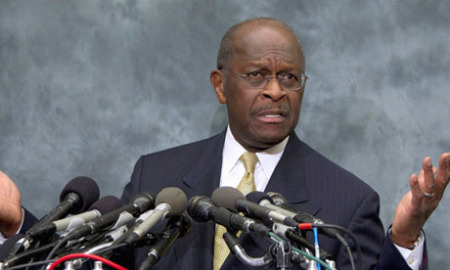
The Herman Cain Tragedy

The one man against whom the “race card” could not be played, and could possibly present a formidable challenge to Barack Obama is Herman Cain.  Now, charges of sexual improprieties have inundated his campaign, forcing him to re-evaluate his commitment to run for President. 

Cain denies all charges, and, as of this writing, nothing has been proven.  Yet, his bid for the presidency may be over.  Something about this whole mess seems sinister.  I am not condoning or dismissing any wrongdoing, but if unproven charges are now perceived as absolute facts, then a whole lot of people are going to be in trouble.  Or, maybe not.  It just depends. 

What’s the catch?  Your politics, of course.  Not Democrat or Republican—or even Independent politics.  No.  Liberal or Conservative politics.  Charges made against liberal politicians need to be verified, documented, fully substantiated with witnesses who have been vetted, and corroborated with photographs.  Then, with great reluctance and delayed until the last possible moment, the media begrudgingly relents and spills the beans.  Even then, it does whatever can be done to minimize the story.  Sympathizers come forward and the public is treated to all the reasons why the culprit should actually be seen as the victim.  Accusers (even after the charges are proven, they are still called accusers) are routinely vilified, said to be agenda-driven and subject to character assassination.  

Conservatives?  Are you kidding me?  First of all, conservatives are suspected of cramming skeletons in their closets before they ever declare themselves as candidates.  They must be guilty of something—even though we don’t know what—just because they have the impudence to be conservative.  Charges are not only accepted as truth on face value, the accusers are sought out and promised the moon for telling their story.  Reporters afford the accusers the highest level of credibility possible, and provide ample cover for them in case their testimonies have a few holes.  The media then peppers the candidates with questions about the alleged incident(s), in as embarrassing a manner as they know how, and demand immediate answers.  If satisfactory answers are not immediately forthcoming, they quickly fire up the second tier of questioning, which, of course, involve the charges of cover-up.  

The implications of these developments in media coverage are withering.  Anyone, for any reason, can launch any charge against any person with devastating effects on our political culture.  No one is exempt, and there is no control over chaotic, unregulated process.  I often hear the phrase “tried in the court of public opinion.”  This is exactly where the process doesn’t belong.  Public opinion is where the most egregious examples of injustice live.  Rules of fairness, rules of evidence, courtroom protocols—none of this applies in the public opinion courtroom.  It’s a wild free-for-all, and the biggest coalitions with the biggest guns, have all the advantages.  

Liberal politicians can trust the media for backup.  Only the stupidest among them may fall.  Conservative politicians have only themselves for backup.  Even the smartest may fall.  It’s a treacherous world, and, for candidates like the likable Herman Cain, survival may be impossible.

Monday
Nov282011

On the Death of My Friends

If you have a superstitious view of speaking of death or find morbid subjects disconcerting, you may not want to read this.  The title should give you a broad hint as to my topic.  If, however, you are curious about the stages of life looming upon your horizon, I recommend proceeding tentatively.  At this point, even I cannot tell you where this piece is ultimately headed; I am just now rolling it out before me as a long, tightly wound carpet runner.  The inauspicious end is folded in there somewhere, and it will pop out soon enough.

I have never cared for statements like, “I could, God forbid, be struck with a dreaded disease tomorrow,” or, “Who knows?  I may be in a head-on…”  No, never mind.  Statistically, predictions like these may be true, but I don’t like to give the thoughts any advantage by articulating them.  I have no intention to plan my funeral or participate in any way in my demise.  That’s enough.  I have already said more about this than I have ever dared to say before. 

It’s just that this strange sensation that now sweeps over me with a greater frequency than I had ever wished for and lingers longer than I expected.  Mysteriously, it beckons me to examine it.  I would prefer not.  Life, with all of its passion and action, intrigue and drama, has consumed me.  I have always vowed to stay away from death, unless I was forced to deal with it in a purely factual way, or as a philosophical matter, or in some exposition on the scriptural view.  I have never approached it with raw emotion in full personal exposure. 

The death of my friends, however, is making me feel differently about all of this.  I am not completely comfortable with the idea, but I find it impossible to be totally repulsed by passing from this life into the next when someone that I have spent hundreds of hours with, golfed scores of times with, and shared countless, heart-to-heart conversations with, has taken that step. 

I guess that what I am trying to say is that, in some sense, a little of me died with them.  If, in the give and take of conversation, we gave and took so much, then we fulfilled the definition of sharing.  I miss that.  I miss the reaction and response.  I miss the subtle associations that they freely made, their humorous, and sometimes pithy elaborations, or the spirited rebuttals in which they contested almost any statement or circumstance that came along.  I took such pleasure in their expressions that I find myself imagining what they would say.  I probably can carry on a conversation with them in I mind that would closely approximate the one I would have if they were still living.  Such is the reticulation of souls knitted together in friendship.

Settling into my topic now, and lacking a friend who will do this for me, I must take issue with myself.  Losing a friend does not mean the loss of friendship.  The friendship was nurtured and cultivated over the years.  It began apprehensively in timid conversations.  It grew in the satisfaction of each other’s company.  It spread in multiple shared experiences.  It became solidified in confidence and integrity.  Finally, it found its roots in the mutual bearing of burdens.  While death may suspend further deposits into that account, it can never rob me of that wealth already accumulated. 

These thoughts do not inspire an obscene desire for death in me.  To the contrary, they actually give me a greater appreciation for life, because it is the life I shared with my friends that makes their death so significant.  Without an expansive experience of life, death would have little meaning for anyone.  Death is not about death; death is ultimately about life.  Death does not serve itself; death serves life.  Death gives full accent and relief to the qualities of life, and forever crystallizes them in our minds.  The heroes’ death—rather than life—may be celebrated, but it is because the extraordinary manner in which they died casts the light of admiration on some aspect of their character.  Thus, it seems to me, the only way my death may be significant is if I pour so much energy and power into the life I live that I will become larger than life. 

And so, I will live—boldly, memorably, with abandon—because I will die.  I have no control over dying, but I have infinite control over living.  Whatever experiences I can pack into my living, whatever meaning I can extract from my living, whatever impact I can deliver by my living, I will do it to the nth degree.  True sadness is to die without ever having lived.

I must dream, and then I must follow my dreams.

I must think, for thinking brings depth, height and breadth to my existence.

I must participate, because that is where relationships are forged.

I must experiment, for that will challenge my unknown qualities and coax them to life.

I must live out loud, for then—in that distant hour—I can die with significance.

Sunday
Nov272011

Christmas and Beyond

“And the shepherds returned, glorifying and praising God…”Luke 2:8-20

            While giddy anticipation reigns during the interminably long period of time between Thanksgiving and Christmas, dread and dismay set in for many folks December twenty-sixth.  Long return lines, seeing items costing full price slashed in half, paying the cards that were so lovingly charged, eating leftovers and wishing they had as much energy to take down the decorations as they had putting them up—such are the dubious rewards of the modern celebration.   We can’t wait until Christmas comes; then, we can’t believe it’s here; then, we are so glad it’s over!  And, some insightful soul said, “Nothing is as over as Christmas when it’s over!”

            Mary and Joseph alone were privy to the day before the first Christmas.  The shepherds, along with Mary and Joseph, were in a unique position to know about Christmas Day. But, after Christmas, we are left with two viewpoints: Mary kept all these things and pondered them in her heart; the shepherds returned glorifying and praising God.

            Whenever a day of great significance takes place, the impact forces a change on the rest of the world.  The repercussions of the change usually register a much greater degree than the original impact.  December 7, 1941 was one such day.  Most of us know firsthand what a monumental change has taken place in America and the world since September 11, 2001.  Likewise, historians can chart the changes that reverberated out from the unlikely village of Bethlehem after the first Christmas.

            The thoughts that Mary kept and pondered in her heart never left her.  They churned in her so deeply that she must have finally realized the answers.  No doubt, the reason she spoke so confidently to the servants at the marriage of Cana was that she knew Jesus was a man of destiny.  The shepherds slipped under the scriptural radar, but they sowed the seed that turned into a ripened field for the gospel.  The day of the event calls for celebration; the aftermath calls for decision and action.

            Something big happened on the first Christmas Day, bigger than Jingle Bells and “Rockin’ Around the Christmas Tree,” bigger than Santa Claus, Rudolf or Frosty, bigger than new watches, iPads or designer jeans.  If all God wanted to say with Bethlehem, Gethsemane, Calvary, the Empty Tomb and His ascension at Bethany was “I love you,” why didn’t He just come down and say, “I love you?!”  No. 

When Jesus Christ is born in your life, when you have an encounter with Jesus, do not think that the experience is all there is to it.  Do you think that the enormity of redemption’s story—that God became man, that he died on the cross, was buried in a borrowed tomb, and resurrection the third day with victory over death—had as its overarching purpose to give man a temporary thrill?

If you have had an encounter with Christ, something bigger than a religion tweak happened.

Something happened that now brings you face to face with a sobering thought:  Now what?! 

You’ve been healed.  Now what?

You got your miracle.  Now what?

You got your answer to prayer.  Now what?

Yes, God does great things for us. But the significant truth to observe is this: When God does great things for us, He places on us an awesome responsibility! In effect, He says to us, “Now that you have had an encounter with My power and presence, what difference will this make in your life?  What difference is this going to make in your relationship to me?”

Answered prayer asks us for reciprocating sacrifice. Look at the example of Hannah. “For this child I prayed; and the LORD hath given me my petition which I asked of him: Therefore also I have lent him to the LORD; as long as he liveth he shall be lent to the LORD.” I Samuel 1:26-28. Hannah wanted a son, but God wanted a prophet. Samuel’s tremendous influence on the history of Israel hinged on two things: God answered prayer and Hannah responded.

A miracle from God demands that we do the will of God. When Elijah  challenged the prophets of Baal, God sent fire to consume the bullock, the altar and the water. But the miracle was not for a show. It demanded a response. “And when all the people saw it, they fell on their faces: and they said, The LORD, he is the God; the LORD, he is the God. And Elijah said unto them, Take the prophets of Baal; let not one of them escape. And they took them: and Elijah brought them down to the brook Kishon, and slew them there.” I Kings 18:39 -40. Difficult though it may have been, Elijah made the Israelites slay the prophets of Baal after the fire fell on the sacrifice.

An encounter with God calls for greater trust in God. Gideon’s fleece was not a set-up for God, but for Gideon. The first time Gideon prayed, the fleece was wet with dew but the ground was dry. Nervous about the answer, Gideon prayed again. “And Gideon said unto God, Let not thine anger be hot against me, and I will speak but this once: let me prove, I pray thee, but this once with the fleece; let it now be dry only upon the fleece, and upon all the ground let there be dew. And God did so that night: for it was dry upon the fleece only, and there was dew on all the ground.” Judges 6:38-40. The next verse finds Gideon rising up early to fight against the Midianites.  He knew that when the answer came through, it was time to move.

Have you been granted

·salvation,

·a reunited marriage,

·a restored family,

·a miraculous healing,

·a financial blessing

·a job, new or saved

·an anointed ministry

·impossible situations worked out

·revival and the fruit of your labors

Whatever God has done for you, mark it down—He has done it for a reason.

It’s the day after. The anticipation is over. The celebration is over.The box is open; the wrappings are scattered; the surprise is over.  Now, it is time for commitment.

Saturday
Nov192011

Kenneth F. Haney

On December 8, 2009, I wrote this letter as a response to the administration of Kenneth Haney after eight years as General Superintendent.  Little did anyone know that we would attend his funeral less than two years later.  As I re-read this letter, I felt it said everything I would have said in a written farewell.  Hopefully, it will add something unique to the hundreds of other expressions that his passing has inspired. 

Dear Brother and Sister Haney, 

Leadership at the highest levels requires a special dispensation of the grace of God.  “All of the great leaders have had one characteristic in common: it was the willingness to confront unequivocally the major anxiety of their people in their time. This, and not much else, is the essence of leadership.”  Of all the things will be said about both of you during your farewell season, this quote from John Kenneth Galbraith seems most appropriate to me.  Your ability to identify the major anxieties of our time, and the courage to address them, will forever define your place in the history of the United Pentecostal Church, International.  

Thank you for bringing integrity, transparency and kindness to the position you held.  Thank you for your determination not to politicize your office.  Thank you emphasizing a realistic approach to our operations, even though it necessitated difficult decisions.  Thank you for leading us again and again to unity and brotherly love, pouring in the oil and balm of healing.  Thank you for reminding us of our glorious oneness Pentecostal past, in both formal and informal ways while continuing to show us an even more glorious future that remains within our reach.  Your irrepressible optimism set the tone for the many leaders under your influence, like me, and you constantly gave us a sense of purpose in our collective vision. 

You accomplished all of the above without diminishing your ability to personally touch our lives.  You took the time to shake our hands, call our names, compliment us on our achievements and listen to our grievances.  You conducted yourself in your official capacity with exemplary humility, never showing the effects of any private burdens or difficulties of your own.  You accepted the will of the brethren as the will of God, and you demonstrated to us all tremendous grace and dignity as you relinquished your position to another. 

I am confident that you will venture into the next phase of your life and ministry with great faith, but there will be moments of reflection on the past eight years.  As you look back, always remember that you engaged in greatness, not pettiness; that you were a force for the positive, not the negative; and that you always chose the right way, not the convenient way.  You did not choose the climate or context of the times in which you were thrust into leadership, but you did not vacillate under the stress and demands of the circumstances.  Truly, you were brought to the kingdom for such a time as this.  

We are a better people, a better organization and we are better equipped because of your eight years at the helm of the United Pentecostal Church, International.  You have our undying gratitude. 

With great love and respect, 

J. Mark Jordan