ThoughtShades FrameWork

ThoughtSculpting:
Essays, Themes, Opinions

PrimaryColors:
Constructs, Practical Ideas, Applications

VersePainting:
Poetry, Impression Writing

WordShaping:
Sermons, Devotions

LifeSketching:
Personal Revelations, Illustrations

Viewpoint: Politics, Contemporary Issues, Editorials

GuestGalleries:

Choice Offerings by Others

Powered by Squarespace

ThoughtShades

Opinions, expressions, essays and devotions. 


Thursday
Nov112010

The Fall of Babylon

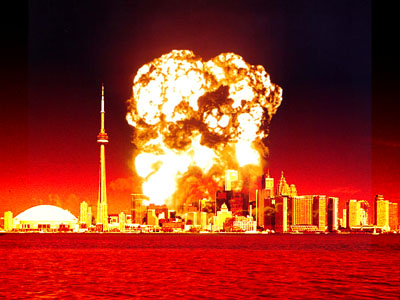
The news is that the economies of the Western world are collapsing.  Greece, Ireland, France…now Great Britain is in turmoil.  Rioting, conflict and unrest are spreading as governments run out of money to dole out.  Pundits say that America is the next Greece.  It is true that Communist China owns much of our debt, and the latest rumor is that the Chinese government is about to have a stake in General Motors! 

We have been on this trajectory for some time now, and it will probably take longer to play out, but the free world (so-called) is in trouble.  Is a totalitarian regime inevitable?  Is brute force on an unprecedented scale—-with stacked bodies and blood running in the streets—-the only way to rein in the rioters? 

Scary times.  But, we can’t say we haven’t been warned.  My thoughts have been going back to Revelation, chapter eighteen.  Some say it is a picture of a literal Babylon.  Others believe that it happened centuries ago.  Still others think it is a prophetic picture of the world economy in the end times.  Whatever, it is still unsettling to me to read it.  Here is the passage from the Message Bible.  Read it and pray for God’s help.

Revelation 18:1-24 (MSG)
1 Following this I saw another Angel descend from Heaven. His authority was immense, his glory flooded earth with brightness,
2 his voice thunderous: Ruined, ruined, Great Babylon, ruined! A ghost town for demons is all that’s left! A garrison of carrion spirits, garrison of loathsome, carrion birds.
3 All nations drank the wild wine of her whoring; kings of the earth went whoring with her; entrepreneurs made millions exploiting her.
4 Just then I heard another shout out of Heaven: Get out, my people, as fast as you can, so you don’t get mixed up in her sins, so you don’t get caught in her doom.
5 Her sins stink to high Heaven; God has remembered every evil she’s done.
6 Give her back what she’s given, double what she’s doubled in her works, double the recipe in the cup she mixed;
7 Bring her flaunting and wild ways to torment and tears. Because she gloated, “I’m queen over all, and no widow, never a tear on my face,”
8 In one day, disasters will crush her— death, heartbreak, and famine— Then she’ll be burned by fire, because God, the Strong God who judges her, has had enough.
9 “The kings of the earth will see the smoke of her burning, and they’ll cry and carry on, the kings who went night after night to her brothel.
10 They’ll keep their distance for fear they’ll get burned, and they’ll cry their lament: Doom, doom, the great city doomed! City of Babylon, strong city! In one hour it’s over, your judgment come!
11 “The traders will cry and carry on because the bottom dropped out of business, no more market for their goods:
12 gold, silver, precious gems, pearls; fabrics of fine linen, purple, silk, scarlet; perfumed wood and vessels of ivory, precious woods, bronze, iron, and marble;
13 cinnamon and spice, incense, myrrh, and frankincense; wine and oil, flour and wheat; cattle, sheep, horses, and chariots. And slaves—their terrible traffic in human lives.
14 Everything you’ve lived for, gone! All delicate and delectable luxury, lost! Not a scrap, not a thread to be found!
15 “The traders who made millions off her kept their distance for fear of getting burned, and cried and carried on all the more:
16 Doom, doom, the great city doomed! Dressed in the latest fashions, adorned with the finest jewels,
17 in one hour such wealth wiped out! “All the ship captains and travelers by sea, sailors and toilers of the sea, stood off at a distance
18 and cried their lament when they saw the smoke from her burning: ‘Oh, what a city! There was never a city like her!’
19 They threw dust on their heads and cried as if the world had come to an end: Doom, doom, the great city doomed! All who owned ships or did business by sea Got rich on her getting and spending. And now it’s over—wiped out in one hour!
20 “O Heaven, celebrate! And join in, saints, apostles, and prophets! God has judged her; every wrong you suffered from her has been judged.”
21 A strong Angel reached for a boulder—huge, like a millstone—and heaved it into the sea, saying, Heaved and sunk, the great city Babylon, sunk in the sea, not a sign of her ever again.
22 Silent the music of harpists and singers— you’ll never hear flutes and trumpets again. Artisans of every kind—gone; you’ll never see their likes again. The voice of a millstone grinding falls dumb; you’ll never hear that sound again.
23 The light from lamps, never again; never again laughter of bride and groom. Her traders robbed the whole earth blind, and by black-magic arts deceived the nations.
24 The only thing left of Babylon is blood— the blood of saints and prophets, the murdered and the martyred.



Friday
Oct222010

Assuming Responsibility

It has been said that if you are not a liberal in your youth you have no heart, but if you are not a conservative when you become an adult, you have no brain.  Sounds reasonable to me.  I am more certain of this:  a fundamental transformation takes place when a person takes the responsibility of life seriously.  This sense of responsibility intensifies when a family appears.  Responsibility causes the vast majority of us to exercise greater caution, take fewer risks, and, generally speaking, rein in any propensity we may have for wild and adventurous escapades.

To be accountable to oneself alone does not typically exert enough pressure for most of us, especially in our youth, to live a reserved, controlled, safe life.  The young soldier who goes off to war, for example, has excitement pumping through his veins; his parents, however, wrestle with a far different set of emotions as they give him that final hug and watch the bus or plane disappear in the distance.  Nearly every high school graduation season brings the tragic news of a carload of graduates involved in a fatal crash, most likely having just left a party where they were drinking or getting high.  While we mourn the loss, we don’t necessarily judge the kids as bad characters.  We think of them as kids out having fun.  Aside from the legal technicalities that obviously apply to the driver, we still consider the real criminal to be the adult who supplied the alcohol or drugs, not the immature youths. 

Accountability to a family is a much more sobering thought.  Most people old enough to get married and raise a family transition from a carefree life to one of adult responsibilities.  We often hear it said, “When he gets a wife and children, he’ll settle down,” or, “all she needs is someone who really loves her and she’ll stop her wild ways.”  If often happens this way, or at least, these are societal expectations.  As a society, we are apt to place much more blame or condemnation on someone who has a family and yet acts irresponsibly. 

Those of us who enter the pastoral ministry, however, understand this principle in a spiritual sense as well as a temporal one.  Pastors have the added burden of accountability to God.  They do not—indeed, they cannot—live only for themselves and continue to properly execute the task of pastoring.  Eternal souls are not to be trifled with.  Even as we have enough common sense not to carry two or three carat diamonds around in our pockets like loose change, we do not handle the priceless souls created and redeemed by the blood of Jesus as though they were worthless. 

In my pastoral ministry, I am occasionally accosted by contentious people about the rules and regulations that they consider silly.  Worse, I have even been told that the way I pastor the congregation that God has entrusted to me amounts to spiritual abuse.  Few, if any, of these critics have assumed the responsibility of watchful care over precious souls.  I use the word precious, not as maudlin sentimentalism, but in a technical sense of being of great price and worthy of honor.  I honor the members of the body of Christ that God has placed in my assembly.  I believe I need to care for their souls with the same vigilance that Smith Barney or Charles Schwab possess in watching over investors’ money.  In fact, I should care even more because money is only temporal, not eternal.  People need to know about pitfalls, dangers, allurements and well-intentioned mistakes that constantly challenge them as they negotiate the roller coaster of life.  I am no better than a shyster or a shark if I fail to exercise due diligence in helping them make their way to heaven.

My classic illustration is to picture a dangerous highway with traffic buzzing both ways at high speeds.  If I am by myself, I can dart out in front of an oncoming vehicle with as much boldness as I want, believing that I can get to the other side safely.  In fact, it can become a little game, sort of like dodge ball.  Suppose, however, that I have my little granddaughter with me.  This changes everything.  I have now assumed responsibility for someone other than myself, and I am not about to act stupidly or carelessly.  I may insist that she hold my hand, even if it slows me down.  Or, I may pick her up and carry her, even though she may fight me and try to make me let her walk by herself.  Sorry, but I can’t risk it.  I am going to wait until the traffic clears.  I am going to move only when I am absolutely sure that I can make it to the other side with no problem whatsoever.  Someone may take the responsibility away from me, but as long as I am responsible, I am going to take every precaution necessary to get her safely to the other side.

Such is the way I view assuming responsibility in the role of a pastor.  Pastors who experiment with various theological positions without knowing the full ramifications of the new doctrines, lift restrictions that have been in place for years, tire of being harassed by people who chafe against the rules and throw open the gate to the world are, in my opinion, acting irresponsibly.  Pastors are not called to babysit, be buddies with their people or use the souls entrusted to them as a means to their own personal objectives in life.  We are called to shepherd souls that are owned by God Himself.  Once that divine objective is embraced, no other motivation exists in the mind and heart of the pastor.  Such is the admonition of the Apostle Paul:

11 It was he who gave some to be apostles, some to be prophets, some to be evangelists, and some to be pastors and teachers, 12 to prepare God’s people for works of service, so that the body of Christ may be built up 13 until we all reach unity in the faith and in the knowledge of the Son of God and become mature, attaining to the whole measure of the fullness of Christ. 14 Then we will no longer be infants, tossed back and forth by the waves, and blown here and there by every wind of teaching and by the cunning and craftiness of men in their deceitful scheming. 15 Instead, speaking the truth in love, we will in all things grow up into him who is the Head, that is, Christ. 16 From him the whole body, joined and held together by every supporting ligament, grows and builds itself up in love, as each part does its work. Ephesians 4:11-16 (NIV)

If I am a saint under the leadership of a pastor, I don’t want him to listen to my immature and irresponsible complaints.  I want him to, lovingly of course, tell me that he wants me to safely make it to the other side.  After all, isn’t this the point of it all?

Thursday
Oct142010

Mock My Shodesty

Those caught in the crunch between colliding paradigms know how dangerous the fallout can be.  Everything is at risk.  When you’ve invested your entire life into a set of assumptions—say, a Christian Weltanschauung, for example— it’s not easy to sit by and watch it go down in flames.  I know if my grandfather were to emerge from his grave and see what’s going on today, he would probably turn around and climb back in his coffin.  This latest headline and story illustrates what I mean:

Divorce, American-style: No-fault is now the law in all 50 states

No-fault divorce became the law yesterday in New York State, making it now possible to file for a split in any state in the union, without having to show fault by one partner. The Empire State was the last state to pass a no-fault divorce law. Such a move could make breaking up much less expensive for many New Yorkers.

Whether that now will result in a new flood of divorces isn’t clear; some news reports said lawyers were seeing a deluge of new clients yesterday, while others said would-be exes were holding back.

Anyone considering a split needs to look beyond the emotional to the financial, ideally well before the papers are filed. That includes getting copies of all relevant financial and legal documents and storing them where your spouse can’t get them; creating a budget as a single person or single parent; and—of course—closing all joint accounts. For more on divorce financial planning, check out “If divorce strikes” and “Splitting up your retirement funds” from Consumer Reports Money Adviser.

Marriage was an early casualty of the new wave, but I can still vividly recall when it was not well thought of, at least in the Midwest.  Gradually, the sexual revolution gathered momentum, and one-by-one, old taboos began to lose their moorings and fell by the wayside.  Divorce, illegitimate children (or, “born out of wedlock”, as we used to say), abortion, sex education, condom distribution, live-in boyfriends and girlfriends, homosexuality, open discussion of formerly suppressed subjects like STD’s, body parts and intimate sexual topics have all flooded into the national conversation.  The older generation has stood helplessly by with reddened faces and shocked modesty, watching it all unfold. 

Now, many sixty-somethings and up can’t even bear to watch.  The internet has put sex on steroids.  Instant porn of the most foul and degrading perversions possible are within a few clicks on a laptop or cell phone.  Social networking has turned texting into sexting.  Song lyrics use four letter words as the core meaning, obviously sexual gyrations in dancing are standard fare, comedians’ total shows consist of blatant sexual humor, and raw sexual themes define much of the entertainment industry. 

The more Christians protest against this corruption, the greater delight the world takes in making it even worse.  It seems to me that if all this is a product of some gigantic conspiracy, then conspirators are winning big time.  Once they took over the universities and the media, it was only a matter of time until the rest of the culture would follow suit.  If I could figure this out with a smattering of undergraduate courses in sociology, don’t you think thousands of Ph. D.’s in philosophy, sociology, anthropology and many other fields in the humanities knew what was happening a long time ago?  My guess is that they did and that they were 100% in favor of it.

What is a Bible-believer supposed to do?  Run the traitors out of office?  Elect social conservatives across the country?  Clamor for a return to constitutional values?  Adopt aggressive platforms by which we will try to convert the population to our way of thinking?  Well, we can try to legislate morality, but the prospects are dim.  Fiscal conservatives may have a slightly better chance to succeed politically, but I don’t see it happening for social conservatives.  Not being pessimistic by nature, it pains me to opine that Christians are in a trouble.  We need to brace ourselves for a new reality: life in a country that no longer embraces Christian values.  Of course, most Christians have understood this for a long time, but, nonetheless, we continue to boldly proclaim that we are going to take this country back and that we have election strategies that will restore the morality of our forefathers. 

Maybe.  I’m not holding my breath.  No, we should not voluntarily capitulate any of our positions, but neither should we hope for political victories that will lead to a fundamental reordering of society in our image.  What we really need to do is come to terms with our total commitment to Jesus Christ and His kingdom.  This commitment is not a function of our political fortunes, but of our baseline convictions.  It is time for us to walk into our prayer closet, as did Daniel, and throw open the windows to pray in the face of our enemies, despite the certain penalties that we may incur for doing so.  Daniel had no control over the politics of the day, but he did have control over his own devotion to the true God.  That was enough for him.

Will it be enough for us?  Some may agonize over the loss of our place at government’s table.  Others may be nervous at falling out of favor with the powers that be.  The true test of our commitment, however, will be when we are faced with fines or imprisonment.  What will we do if we lose property, fortunes, legal protection or guaranteed rights?  Will we compromise our core beliefs to gain political capital?   How far will we go to avoid being shut out of the reigning cosmos?  Dr. Richard Crocker says, “In the late Roman Empire, subjects were required to make a confession each year that ‘Caesar is Lord.’ If they made that claim, they could practice any religion they wanted, as long as they proclaimed that Caesar was the ultimate authority whom they obeyed. To refuse to make that confession was to risk execution. Early Christians refused to make it. They insisted that ‘Jesus is Lord.’ And so they were, some of them, thrown to the lions.” 

Let us not forget that the whole of the New Testament was written by men who had no role in their government—indeed, they lived in the midst of official hostility to Christianity.  Moreover, let us not forget that great revival, the vast expansion and the missionary vision of the church took place in a climate of adversity.  Does it not make sense, then, that the descendants of these martyrs should expect some form of opposition?

Should we work for political victories?  Absolutely, especially in a democracy that gives us that privilege.  Should such political favor result from these efforts, I will be the first to celebrate.  At the same time, our morale must not rise or fall on the basis of our status in the government.  After all, secular favor has never been a goal of the church.  Our objective is much loftier than anything Washington D. C. can offer us. 

Jesus said that evil men shall grow continually worse.  That doesn’t provide much of a role for righteous-minded people.  We will never run with the evil crowd.  They will never love us.  Instead, let us maintain our allegiance to God, to the Bible and to our principles.  Let us go on, unconcerned with the political ramifications of our positions.  We are free.  The wide swath that spiritual freedom cuts means freedom from political patronage, government approval and the favor of the Caesars of the world.   

Sunday
Oct032010

Tertiary Politics

Primary, secondary, tertiary.  First, there is the primary issue.  Then, there is the secondary issue about the issue.  Finally, there is the tertiary issue about the secondary issue about the primary issue.  Some elucidation may be necessary:

Let’s say the primary issue is healthcare.  Fair enough.  That issue, however, spins off secondary issues like tax incidence, extent of coverage, pre-existing conditions, time tables, and so on.  Anyone who either rejects or embraces healthcare enters the bruising fray of secondary issues.  So, healthcare winds up being either a political sledgehammer or a comfort zone, depending on the political persuasion of the group of people in question. 

Now comes the tertiary issue.  At this level, the dynamics of the debate explode beyond the specific issue and its politics to forge distasteful labels, or, in the present vernacular, branding.  Epithets like racist, bigot, commie, Taliban, traitor, neocon or yellow dog Democrat fly through the airwaves and the print media.  Certainly, savvy people who take a position on primary issues expect the resulting repercussions from the opposition, but many of them do not foresee the nastiness of branding.  It seems grossly unfair to be branded simply for declaring oneself for or against an issue.  Yet, the tertiary aspect of the debate is an undeniable political reality. 

We do many things to escape the unfairness of tertiary politics.  For example, we seek to soften the hard labels of conservative or liberal by saying that a person is right-leaning or left leaning.  A middle ground is often staked out that is called moderate, implying that one takes the best of both worlds, but rejects the extremes.  In the Bush era, the term compassionate conservative was advanced as an attempt to blunt the perceived offensive nature of conservatism—without much success, I might add.  Also, many people try to define themselves as a mixture of positions such as a social liberal and a fiscal conservative.  All this manipulation of terms may be tied to paranoia of tertiary politics. 

The immediate exasperation of tertiary politics is that well-intentioned people get lumped together with extremists, radicals, malcontents and riff-raff, all of whom happen to have a similar position on one issue.  This is the genesis of the old adage, “politics make strange bedfellows.”  Proponents of an issue forge unlikely alliances as a way to achieve success for their common ground, but they often have to suffer the penalty of another old saying, “if you lie down the with dogs, you get up with the fleas.”  We are often tainted with the foibles of our cohorts, but rarely with their strengths.

But the further—and more unfortunate—nature of tertiary politics is that it forces the primary issue to take a back seat to the furor it creates.  The public debate engendered by the issue makes it impossible to ferret out the salient points that truly need to be discussed.  Even when one side or the other makes a valid case that the opposition truly finds appealing, the branding that accompanies some concession on their part prohibits any action.  Thus, tertiary politics kills legitimate debate, numbs minds and often suppresses truth.  We cannot venture off the reservation of approved ideas lest we offend the prevailing brand.

Some may think that better education about the issues and the politics that govern them would lead us out of this wilderness.  Hardly.  Few arenas are more rabid in knee-jerk branding than academia.  In fact, members of the intelligentsia play the tertiary political game with greater skill than their lesser-gifted brothers and sisters in the world-at-large.  It would seem then, that learning from the institutions of higher learning serves only to entrench us further into tertiary politics than lead us out of it. 

And, lest we think that the church, because of its message of love and grace, extends a greater dispensation of tolerance to various ideas, we find a measure of disappointment.  We couch our reactions in terms of expediency, wisdom, moving in the right direction and the spirit of the church, but nevertheless, we often resort to our own style of tertiary politics.  Rather than engaging in free and open discussion without the risk of branding, we direct our remarks to sympathetic souls, conduct guarded conversations with those who disagree with us, and refuse to say anything that may rock the boat.  Those who speak their mind find themselves marginalized or ostracized. 

The Apostolic Paul fought against labeling with the Corinthians, among others.  It is intriguing to read his confrontation with them in his second epistle to this church.  The Message Bible renders it this way:

1 And now a personal but most urgent matter; I write in the gentle but firm spirit of Christ. I hear that I’m being painted as cringing and wishy-washy when I’m with you, but harsh and demanding when at a safe distance writing letters.
2 Please don’t force me to take a hard line when I’m present with you. Don’t think that I’ll hesitate a single minute to stand up to those who say I’m an unprincipled opportunist. Then they’ll have to eat their words.
10 “His letters are brawny and potent, but in person he’s a weakling and mumbles when he talks.”
11 Such talk won’t survive scrutiny. What we write when away, we do when present. We’re the exact same people, absent or present, in letter or in person.
12 We’re not, understand, putting ourselves in a league with those who boast that they’re our superiors. We wouldn’t dare do that. But in all this comparing and grading and competing, they quite miss the point.
 2 Corinthians 10:1-2, 10-12. 

If tertiary politics, bigotry and xenophobia live today, we can safely assume that they were far worse two thousand years ago.  One only need explore the conflagration that blew up over the introduction of the Gentiles into the church in order to understand the intensity of the debate at that time.  Yet, through the help of the Holy Spirit, even that culture that was so entrenched in racism found a way to overcome it.  I maintain hope that we can confront the nemesis of tertiary politics in the church and see our way to productive and reasoned dialogue.  It will not be without the leadership of the Spirit, but it will also require human leadership as well. 

Dialogue ends where disrespect begins.  We must confront tertiary politics and refuse to let it drive the personal or organizational climate.  In the end, positions on issues may not necessarily change, but a deepening of respect toward others who differ with us on any issue may create a climate where change at least has a chance.  We can know where we stand without judging each other’s motives or maligning each other’s character. 

Jesus said it best.  “Ye have heard that it hath been said, Thou shalt love thy neighbour, and hate thine enemy. But I say unto you, Love your enemies, bless them that curse you, do good to them that hate you, and pray for them which despitefully use you, and persecute you; That ye may be the children of your Father which is in heaven: for he maketh his sun to rise on the evil and on the good, and sendeth rain on the just and on the unjust. For if ye love them which love you, what reward have ye? do not even the publicans the same? And if ye salute your brethren only, what do ye more than others? do not even the publicans so? Be ye therefore perfect, even as your Father which is in heaven is perfect.” Matthew 5:43-48.

Loving your enemies sounds the death knell to tertiary politics.

Friday
Sep242010

Life 101

Wake up on your own.  “I myself will awake early.” Psalm 108:2.  It’s a familiar scene: you oversleep and miss an important appointment. You stayed up too late the night before, morning light has not yet seeped through the window, and the soft, warm bed is just too cozy. Suddenly, the realization that you are going to be late rudely interrupts your glorious rest. Unfortunate sleepyhead that you are, you then bolt upright, rush around furiously brushing teeth, combing hair, ransacking drawers for socks or belts, and venting frustration at other people in the house for letting it happen.

“Why did you let me sleep?” you charge. “You knew I had to get up at six!” It’s hard for the rest of the household not to feel guilty when the barrage starts.

“I don’t know, dear. I thought you knew…I thought you were up…I got busy watering the flowers…I’m sorry…”

Come on. The truth is that the responsibility to roll out of bed belongs to you alone. If help is needed, alarm clocks have been around for a long time, and they’re not that hard to operate. Failure to get up in the morning lies with one’s own laziness, lack of motivation and indolent attitude. But, rather than admit such character flaws, it’s much easier to blame everybody else. The slothful man only has himself to blame. “[As] the door turneth upon his hinges, so [doth] the slothful upon his bed.” Proverbs. 26:14.

In the same vein, there are a number of other basic truths to life need to be mentioned as well. Some are practical, some are common sense, some are spiritual principles.  All of them are important.

Learn to talk. Quit growling, grunting and slurring. Speak up, say it right, say it kindly.

“Do people ask you to repeat yourself because they didn’t quite catch what you were saying? Every time you speak to a single person or a group of people, they need to hear clearly the words that you say. So often, we are tired, or it is the umpteenth time that you’ve repeated the same speech, or you never move your lips or jaw when you speak.”  Brenda Smith

Learn to Read. Not how to read, but the practice of reading. Know what’s going on in the world. The more you know, the more interesting you become. Learn new words. If you don’t use them, at least understand them.

What should you read?  Read the Bible, Christian books, documentaries, historical novels, self-improvement books, informational books and articles.  Keep a dictionary handy or use the internet to look up definitions.  The reason people do not read is because they think they don’t like to do it.  The way to overcome that is just to start.

Get a job and keep it. “And that ye…do your own business, and to work with your own hands.” 1Thessalonians 4:11 . “…If any would not work, neither should he eat.” II Thessalonians 3:10.  St. Francis of Assisi is credited with the saying, “Preach the gospel always; if necessary, use words.”  Let me adapt this to getting a job.  “Work always.  If possible, do it for pay.”

Would you work for nothing?  Sure.  That’s what volunteering is all about.  Students go to school for nothing.  In fact, they pay to go.  Isn’t that the equivalent of paying to go to work?  When you work, you usually learn something.  Even if you don’t, you are keeping yourself occupied and out of trouble.

Use manners. “Manners are of more importance than laws…Manners are what vex or soothe, corrupt or purify, exalt or debase, barbarize or refine us, by a constant, steady, uniform, insensible operation, like that of the air we breathe in.” Edmund Burke. “Please”, “thank you” and “excuse me” still work. Respect and courtesy still work. Consider the feelings of others.

Be on time. When you are consistently late, you are stealing from the other person’s time. It is selfish, rude, insensitive, and usually unnecessary. 

Don’t expect special privileges. “For I say…not to think of himself more highly than he ought to think; but to think soberly, according as God hath dealt to every man the measure of faith.” Romans 12:3  Earn your keep. Only God gives us grace.

Keep your word. You will never be taken seriously unless you keep your word. “But above all things, my brethren, swear not, neither by heaven, neither by the earth, neither by any other oath: but let your yea be yea; and your nay, nay; lest ye fall into condemnation.” James 5:12

Tell the truth. “Provide things honest in the sight of all men.” Romans 12:17 “Walk honestly toward them that are without.” 1Thessalonians 4:12  Some people are confused about telling the truth.  It does not mean that you tell everything you know.  It means that you refuse to deceive anyone.   

Take care of your name.  Proverbs 22:1 A good name is rather to be chosen than great riches, and loving favour rather than silver and gold.  Ecclesiastes 7:1 A good name is better than precious ointment; and the day of death than the day of one’s birth.

Your name is you.  When your name is mentioned, the response people give is a referendum on their opinion of you.  Don’t do anything to cast suspicion on your name.  If your name comes under attack, take the necessary steps to clear it up.  No one else will be as protective of your name as you are. 

Pay your bills. You are the only one who is responsible for your debts. If you cannot control your credit cards, tear them up. “Owe no man any thing, but to love one another: for he that loveth another hath fulfilled the law.” Romans 13:8. This means denying yourself luxuries you can’t afford. You live a lie when you pamper yourself with things you can’t pay for. For momentary pleasure, you ruin your peace of mind. If you can’t pay the bills you have, you can’t afford a cell phone, a membership to the spa or a vacation to Florida.

Don’t freeload. Moocher, beggar, bum, bummer, drone, freeloader, gate-crasher, hobo, idle , loafer, lounge lizard, mendicant order, nonworker, goof-off, panhandler, parasite, scrounger, sponger, tramp, drifter.

Human parasites cost somebody money. Don’t force someone to throw you out on your ear, and then complain that they are so mean.

Stop wasting time. Too many people spend inordinate amounts of time watching TV, DVD’s, reading trashy magazines and books.  These worthless activities waste time as well as cause moral and spiritual harm. Stop other non-productive activities such as excessive day-dreaming, addiction to games and general laziness. Idleness is condemned in 1 Timothy 5:13  “And withal they learn to be idle, wandering about from house to house; and not only idle, but tattlers also and busybodies, speaking things which they ought not.”

Why do people waste time?  They are afraid of the task before them; they lack motivation; they lack a vision for their lives.

Plan your day.

  1. Something Spiritual
  2. Something Productive
  3. Something Familial
  4. Something Physical
  5. Something Playful
  6. Something Financial
  7. Something Educational

Do not be afraid of commitment.

  • You do your best work when you make a commitment.
  • Others are more confident in you when they know you are committed.
  • The stronger the commitment the greater the power to focus.

Love truth.

  • “You shall know the truth and the truth shall make you free.”  John 8:32
  • Knowing the facts about God and the Bible is not the same as knowing truth.
  • Truth in context, in depth of field, gives it texture, character, personal meaning.
  • This is what it means to love the truth.

You Alone Are Responsible for Yourself

What’s the bottom line? Stop counting on others to wake you up, prop you up, pick you up or pump you up. Do the basic tasks that life requires. As long as you continue to manufacture truckloads of excuses to cover your faults and failures instead of addressing the real problem, you will never win. God’s word places the responsibility for yourself on your own shoulders. “Examine yourselves, whether ye be in the faith; prove your own selves.” II Corinthians 13:5


Monday
Sep202010

The Basics of Balance

(Here are some of the remarks I shared with the 2010 Ohio District Men’s Retreat:)

                Are you feeling out of control?  Confused?  Overextended and underachieving?  When Christian men begin to feel this way, the first place they usually look to find the problem is the church!  “I’m not taking care of myself enough; I need some time off.  I need to do some things that relax me and take my mind off of things.  I give way too much time to ministries.  I’m tired of being the “go to guy” for everything.  It’s time they found someone else.”

                This is not the way it’s supposed to be, is it?  Jesus said, “I am come that they might have life and that they might have it more abundantly.”  The Apostle Paul said, “For the kingdom of God is not meat and drink; but righteousness, and peace, and joy in the Holy Ghost.” Romans 14:17.

                So, when your life isn’t so abundant, or you don’t notice much righteousness, or peace and joy, then the temptation to doubt your relationship to God shows up.  When this happens, most of us either push on the accelerator and go from ninety to a hundred, or else we slam on the brakes and pull off to the side of life’s highway.  

                The secret is to discover the Scriptural way to manage our lives.  It is found in 1 Thessalonians 4:4 That every one of you should know how to possess his vessel in sanctification and honour.”  The word possess literally means to acquire or own.  Since we belong to God (1 Cor. 6:19-20), the only way we own our bodies is through trust or stewardship.  A steward manages the things assigned to his charge.  It is time we took seriously the job we have to manage our vessels, or ourselves.  If we are going to manage our lives, we need to know our parameters, goals and objectives.  We need to find out what’s right.  From the standpoint of eternity, serving God is the right thing to do.  We must achieve a balanced life. 

                Balance was everywhere in the plan of God. The center of the nation of Israel during its wilderness wanderings was the tabernacle.  Whenever they encamped, the tabernacle was surrounded on all four sides by the twelve tribes of Israel, three on each side.  The seven golden candlesticks were arranged so that one was in the center in perfect symmetry.  The Ark of the Covenant had two cherubim facing each other, both looking down at the mercy seat between them.  Balance was evident in the life of Jesus as he grew to manhood. “And Jesus increased in wisdom and stature, and in favour with God and man.”  Luke 2:52.

                But there’s more.  In order to achieve a balanced life, Jesus Christ must be at the center.  This is the image provided for us by the prophet Ezekiel:  “And when I looked, there were four wheels by the cherubim, one wheel by one cherub and another wheel by each other cherub; the wheels appeared to have the color of a beryl stone. 10 As for their appearance, all four looked alike—as it were, a wheel in the middle of a wheel.” Ezekiel 10:9-11 NKJV

                Christ at the center of your life?  The very thought runs counter to the conventional wisdom of our day which proclaims the individual self to be the hub.  If God, or religion, has a role at all, the prevailing philosophy holds that it should be out on the periphery.  Modern thinking may concede that faith may be one of the factors we allow to govern our lives, but it openly rejects the notion that God should dominate.

                Surprisingly, many professing Christians act out this philosophy.  Even though they define God as their all-important, number one influence, they nevertheless deny him that role in a practical sense.  Too many people are theoretical believers but practical atheists.  They profess to believe in God but you wouldn’t know it by the way they live their lives. 

                Yet, when we get a true understanding of our origin, our purpose on earth, the very meaning of our lives and the fact that God is the single source of all power and strength, the center represents the only place he can be.  James writes, “Every good gift and every perfect gift is from above, and comes down from the Father of lights, with whom there is no variation or shadow of turning.”  James 1:17. NKJV

                Ezekiel’s metaphor of “The wheel in the middle of the wheel” perfectly illustrates the importance of the center. Look at the characteristics of the wheel:

  • The hub lies at the center.
  • All the thin, narrow spokes tie the rim to the hub.
  • Conceptually, the rim is just an extension of the hub.
  • The center is the measure of the spokes. 
  • The spokes can be any length, but they have to be equal.
  • With the parts properly placed and spaced, the wheel turns. 
  • If the spokes are dismantled, nothing happens.
  • The wheel must be balanced in order to run smoothly.
  • Wheels even slightly out of balance cause vibration and gradual damage.

                Now, let’s transfer that picture of the “wheel in the middle of the wheel” to our relationship with Jesus Christ.  Christ is your hub.  He must be at the center of your life.  “Sing to the LORD, for He has done excellent things; This is known in all the earth. 6 Cry out and shout, O inhabitant of Zion, For great is the Holy One of Israel in your midst!”  Isaiah 12:5-6 NKJV.  God is in the midst of life, or, we could also accurately say, God is in the middle of your life.  It is not His will, however, to be in the middle of a chaotic, disjointed life in which nothing connects to him, or nothing matters to him.  The fact is, like the spokes of a wheel tie the perimeter to the hub, all the issues out on the perimeter of your life—family, job, possessions, church, recreation, bank accounts—pertain to God in a very relevant, active way.  Every important part of your life has a relationship to God.

                Living a balanced life is not a random occurrence.  You must plan for it to happen.  This does not include the non-discretionary things like eating, sleeping, shopping, personal hygiene, driving, or interacting with people.  You will do these things whether or not you plan for them.  Your critical planning, though, has to do with things you do with your discretionary time.  Skipping these things may not have immediate consequences, but don’t minimize their importance.  Understand that the greatest meaning in your life is produced by the things you don’t really have to do rather than the things you think are necessary to do.  Ultimately, the real you will be shaped by the use of your discretionary time.

                Chances are extremely high that unless you specifically plan to do the discretionary things, you will simply not do them.  You must not leave them to the whim of the moment.  They will not seem urgent or vital.  Planning forces you to think about them, and, once you begin to think about doing them, you are much more likely to follow through and put them into action. 

                At the end of the day, all of us are accountable to God for how we manage our own life and time.  “So then every one of us shall give account of himself to God.”  Romans 14:12.  Make your accountability proactive, not something to dread.  When you take the time to plan your life according to God’s principles, the end result will be a balanced, productive and effective life.  


Tuesday
Aug312010

What Happens to a Man When He Gets Elected to An Office?

“Brother, you have been chosen to serve.”

Those words, first announced, come as a shock to most elected officials.  When I heard them, a trembling sensation spread outward from the pit of my stomach.  I thought of the people I was succeeding, the responsibilities that were about to be laid on my shoulders, and the new relationships that I was going to forge with all my colleagues.  They would now look at me differently, even though I didn’t want them to.  I was now presumed to have all the answers, even though I didn’t have any more answers now than I had before the vote was taken.  I didn’t want to be thrust into this spotlight, even though I knew it was unavoidable. 

The elected leader becomes more cautious.  Before taking office, the leader formed his opinions quickly and instinctively, and shared them with anyone who happened to be standing by, having little regard for their affect.  He rarely questioned his own judgment or redacted his statements.  Proudly, he was what he was, and he took pleasure in his confident approach to all problems.  He often criticized his elders with impunity, and exchanged knowing, bemused looks with his friends when something was said that seemed ridiculous or unintelligent.

Upon election, however, a sense of responsibility settles down upon the leader.  He starts to exercise much more caution in analyzing situations.  Because the prospect of real life consequences tempers his judgment, he reins in his free-wheeling bluster. Names, events, personal histories become muted, filed away in the back of his mind rather than carelessly rolling off his tongue over a cheeseburger and coffee.

He begins to represent and serve all the constituents.  Before he became an official, he had a group of close friends that shared his views and convictions. There were other ministers, however, with whom he had little in common.  Other than belonging to the same organization, he really didn’t know who they were, what they believed, or what their accomplishments and capabilities were.  Now, necessity has brought him into a much closer relationship with them.  There were yet other men, however, that he knew quite well.  He had profound disagreements with them; they were at the opposite end of the conservative/liberal spectrum from him.  They fit neatly into well defined niches that he had created in his own mind.  He avoided them if at all possible.

Now, his relationship with all of these individuals and groups has changed.  He must limit his association with his former close friends, at least in terms of expressing his opinions and sharing the news of the day.  Every minister stands equal in his eyes.  Pigeon holes have ceased to exist.  While he still holds his same convictions, he can no longer avoid communicating with certain ministers.  He must set his disagreements with them aside to the extent that he can represent and serve them as licensed ministers. 

He feels the weight of each minister’s personal burden.  Other than knowing names and home towns, most ministers have scant knowledge about all but the most visible or popular of their colleagues.  All of them lead extremely busy lives and have little time to maintain relationships beyond their church congregations. 

The elected official, however, assumes an obligation to serve his constituents personal and organizational capacity.   He must inform himself of personal, family and church circumstances of ministers in his jurisdiction, including sicknesses, deaths, financial reversals, church problems and any other major situations that may affect them.  This is more than just acquiring news.  It must be a heartfelt response to their needs.  He remains on call 24/7.

He understands that his decisions will determine the fate of ministers, churches and the district.  It’s one thing to be opinionated without the ability to enforce one’s opinions.  It’s another matter entirely to know that the implementation of those opinions become the fait accompli of constituents.  No burden of leadership outweighs this one.  One, single election places the authority, the instruments of power and the means to fund decisions in the hands of the official.  Such a concentration of power cannot be received or administered lightly.  Hasty conclusions, arrogance and a desire for control must give way to patience, meekness and the gathering of consensus if the wise official wants to execute the duties of his office fairly.  At the same time, he cannot fail to act decisively.  The bottom line is that decisions do have to be made and by virtue of his acceptance of the office, he is the only one authorized to make them. 

He realizes that his words will carry more weight than ever before.  Speculation, musing, thinking out loud—these are luxuries enjoyed by those who are powerless to act.  While every word of a leader should not be taken as a binding statement, nevertheless, words set the tone for people to perceive the leader’s thoughts and intentions.  Nothing he says should sound a discordant note, an unwarranted criticism, a threat or reckless expression.  He cannot help but speak with authority since it is inherent with the job, but it must only be exercised in a subdued, humble manner. 

The question raised in this article, however, is: what happens to a man when he gets elected to an office?  Granted, as has been outlined in the foregoing paragraphs, he alters his behavior in significant ways, and his motivation for acting changes.  A far more basic question is this:  does he become a different person?  I find this an intriguing question.  Is it possible that the very reasons that prompted an organized body of constituents to elect a person to fill an office disappear the moment he assumes his position?  If a man is elected for his boldness and strength of convictions, does he become cowardly and weak the moment he is elected?  If his attributes of congeniality and warmth made him attractive to the voters, does he become distant and cold when he takes up his official duties?  Will the office embolden his harsher tendencies and mute the attributes that won him the post?  Is it ever possible for a voting constituency to get the man it wants?

I cannot fully answer the question whether or not the election changes a man—although I suspect it does—but, I would contend that a newly elected official begins to operate out of a very different paradigm from his pre-election worldview.  He moves from the posture of a challenger to that of preserving the status quo.  He sheds any narrow-minded views that he may have possessed to significantly widen his circle of tolerance and acceptance.  He suppresses his criticism of the organization and the people who lead it and instead becomes an advocate (or even an apologist) for the body.  Where he may have previously excused some forms of criticism or dissension, he now openly discourages such activity and aggressively recruits supporters.  While he may have been ambivalent to detractors, he now seeks to cast the organization in the best possible light.  I admit that these observations may be somewhat overstated in order to get my point across, but I believe that they represent the truth to a measurable degree. 

The preceding contentions do not necessarily mean that an elected leader cannot or will not make changes for the better.  Indeed, he may undertake sweeping changes that have been long overdue.  He may set a different tone for his administration.  He may address grievances and implement policy that will move the organization in a different direction.  But, the essence of his actions will still be on the side of preservation and solidification.  He will not seek to dismantle, but to sustain the whole.  He certainly does not want to be the one who brought down the organization.  And, therein lies the dilemma.  How can he change anything without being changed?  Moreover, if he does change, will he still be capable to affect the changes necessary to make the organization better?  It is a distinct possibility that his success may be the precursor to his failure.

What is the ideal outcome of an election?  I believe that the effective leader owes it to those who put him in office to monitor himself closely.  He must discern any shifts of his own attitude that will fundamentally change him into a different person than the one that was asked to serve the body in the first place.  If he came into office with a vision for positive change, he must fight to maintain that ideal despite all the pressure to do otherwise.  He must overcome the stifling inertia that often paralyzes an organization and get it moving again.  He must continue to cultivate his own creativity and that of others in order to keep the organization fresh and exciting.  He must have the courage to withstand a negative political climate that resists doing things differently. 

I have no doubt that a man’s self-perception changes in a profound way when he is elected to an office.  But his conferred authority, even though it greatly impacts his behavior, will not supersede the moral authority that he already had as a person.  If he was a fully integrated human being before his election, he has the opportunity to lead in a positive direction.  If he was incomplete before taking office and he considers his election as the factor that legitimized his personhood as well as his leadership, he will stumble.  Warren Bennis said, “Effective leaders—and effective people—understand that there is no difference between becoming an effective leader and becoming a fully integrated human being.” 

Leadership changes a man’s duties; it must not change his heart.

Wednesday
Aug182010

Pleasing God in Perilous Times

Paul issued a dire warning to Timothy “that in the last days perilous times shall come.” 2 Timothy 3:1.  One would think he had reference to international crises or political dilemmas.  Surprisingly, he did not.  He specifically focused on the decadent behavior of mankind.  Thus, the changing values of our world and culture demand a response from the church.  Does the Apostolic lifestyle—the way we live, the way we dress and the things we do—have any significance to the Christian today?  Where do we see predominant trends taking us? 

I think most of us would agree that we are trending in a worldly, non-Christian, non-Biblical, secular direction.  This dangerous direction, including the deterioration of morals, the rise of perversion and pornography, the use of sexuality and immorality as a commercial tool, the erosion of ethics, the breakdown of decency and wholesome living, the blurring of gender distinctives, the sanctioning of promiscuity and provocative dress, and the lowering of standards in every area of behavior, appearance and thought, fall under the purview of sound Bible doctrine and holiness teaching.

Question:  Where should the behavior, attitudes, dress, appearance and practices of Christians be taught?  If holiness principles are not taught in church from a Biblical perspective, where and how will they be taught?  Few institutions or people think these things are important anymore.  They are rarely taught or encouraged any place in our society, not even in many churches.  In fact, such standards are routinely scorned by the powers that be.  Many leaders have even opened the doors wider than ever to a more permissive lifestyle.  “This is a post-modern society,” we are told.  “People don’t think that old way anymore.”

My reply is this:  Our mandate is to please God, not man.  If the church embraces the declining morality of our times, we necessarily forfeit our sure, biblical foundation.  The Bible, in spite of numerous translations and liberal interpretations, has never changed its basic message of holiness and righteousness.  We cannot hold the bible in high regard and simultaneously violate its principles.  Abandoning these principles in order to accommodate “post-modernism” will find us adrift in an ocean of theories; a perilous journey devoid of absolutes.  Three important observations must be made here which secure the place for holiness teaching.

Holiness is essential part of the Christian life.   “Follow peace with all men, and holiness, without which no man shall see the Lord.”  Hebrews 12:14.  This is not merely a recommendation, but a command.  Peter wrote to the church, “But as he which hath called you is holy, so be ye holy in all manner of conversation; Because it is written, Be ye holy; for I am holy.” 1 Peter 1:15-16. 

The Bible gives us powerful reasons to live a holiness life.  We do it for God.   “Know ye not that your body is the temple of the Holy Ghost which is in you, which ye have of God, and ye are not your own? For ye are bought with a price: therefore glorify God in your body, and in your spirit, which are God’s.”  1 Corinthians 6:19-20.  We do it for others.  Let your light so shine before men, that they may see your good works, and glorify your Father which is in heaven.”  Matthew 5:16.  We do it for ourselves.  “To present you holy and unblameable and unreproveable in his sight.” Colossians 1:22.

The Bible provides a solid basis for a holiness life.  Faith produces holiness.  For by grace are ye saved through faith; and that not of yourselves: it is the gift of God: Not of works, lest any man should boast. For we are his workmanship, created in Christ Jesus unto good works.”  Ephesians 2:8-10.   Love for Jesus produces holiness.  “If ye love me, keep my commandments.”  John 14:15.  “Love not the world, neither the things that are in the world. If any man love the world, the love of the Father is not in him. For all that is in the world, the lust of the flesh, and the lust of the eyes, and the pride of life, is not of the Father, but is of the world.” 1 John 2:15-16.

God knows the perils of this journey. He has given us three main forces to guide us in a holiness life:

First, we have the Bible to give us formal and authoritative statement of truths.  Paul wrote, “All scripture is given by inspiration of God, and is profitable for doctrine, for reproof, for correction, for instruction in righteousness: That the man of God may be perfect, throughly furnished unto all good works.”  2 Timothy 3:16-17.  These truths come to us in explicit statements and implicit principles.  When we cannot locate specific statements in the Word of God, we can always find principles that answer our questions. 

Second, God has provided for us chosen leaders that we call pastors and teachers.  Although human, God grants them anointed insight to qualify their leadership.  Let the elders that rule well be counted worthy of double honour, especially they who labour in the word and doctrine.  For the scripture saith, Thou shalt not muzzle the ox that treadeth out the corn. And, The labourer is worthy of his reward.” 1 Timothy 5:17-18.   Leaders have no authority to add to or take away from the Word of God.  They are charged with the task of explaining and applying the teaching of Scripture.

Third, we have been baptized with the Holy Spirit.  The Spirit of God will not contradict the Word of God.  Since He is called the Holy Spirit, He is immersed in the nature of holiness and gives us internal promptings in time of need or question.  But the Comforter, which is the Holy Ghost, whom the Father will send in my name, he shall teach you all things, and bring all things to your remembrance, whatsoever I have said unto you.” John 14:26.

We can complicate this discussion in a plethora of philosophical views, anecdotal illustrations and contentious arguments.  Simply stated, however, the overarching goal of every Spirit-filled Christian must be to please God.  It is He who establishes our holiness benchmark.  Pleasing God often dictates positions and actions that the world and the flesh find displeasing.  “No man that warreth entangleth himself with the affairs of this life; that he may please him who hath chosen him to be a soldier.” 2 Timothy 2:4.  The operative question must never be “What does God permit?”  Rather, let it be “What is God pleased with in me?” 

Pleasing God in perilous times becomes the premise of our relationship with Him.